
Integrated vs. Standalone Pulp Molding Equipment: Scenario Ranking
Procurement Ranking Guide
Integrated vs. Standalone Pulp Molding Equipment: Scenario Ranking
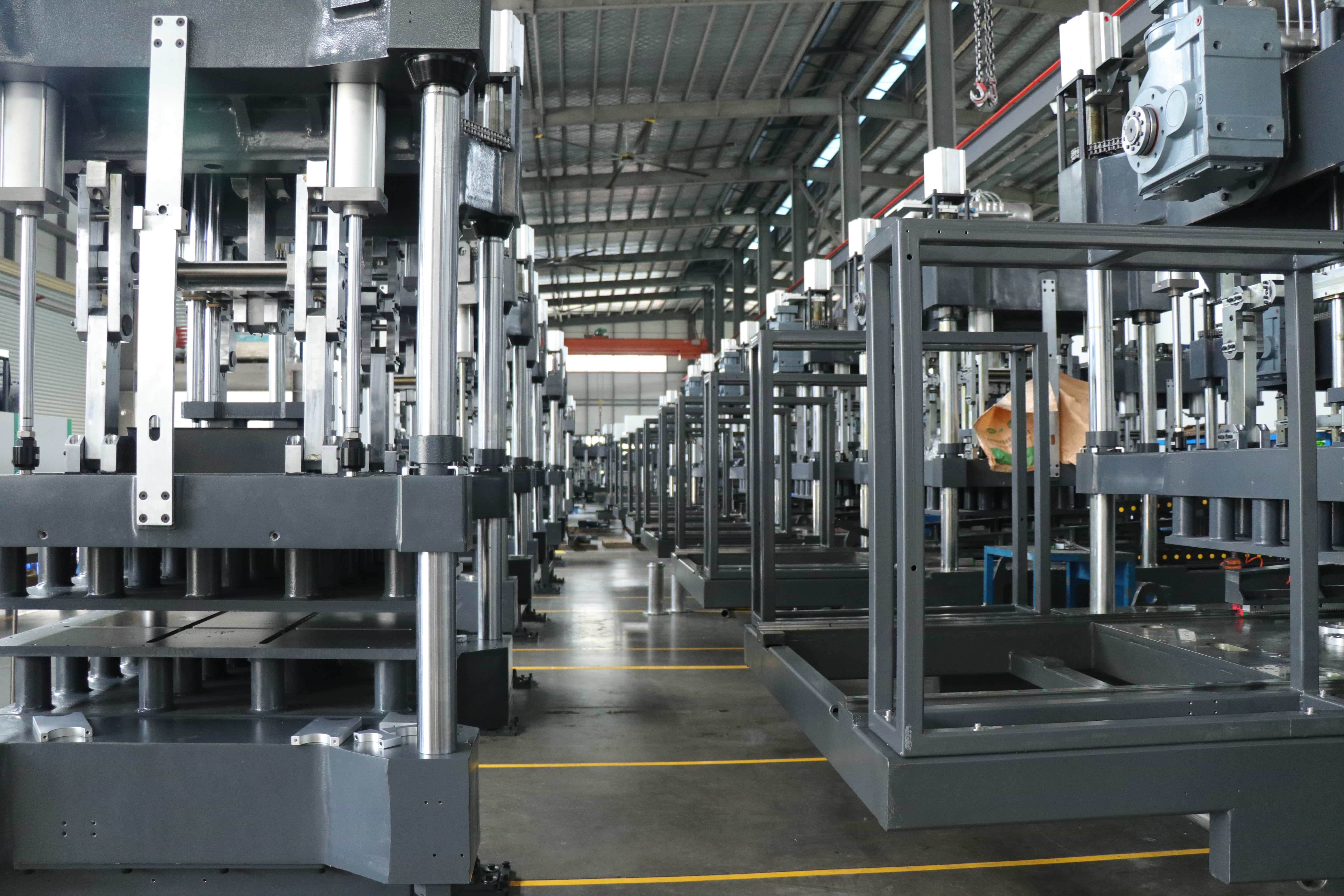
For a new pulp molding factory or a first-time entrant, an integrated turnkey purchase usually ranks above standalone machine procurement. The machines themselves are not the reason. The ranking difference comes from interface ownership: in an integrated project, one engineering team is responsible for pulping, slurry feeding, forming, hot pressing, trimming, inspection, stacking, packing, utilities and commissioning as a single production system. Standalone procurement ranks higher mainly for buyers who already run a mature pulp preparation system, stable utilities and an experienced in-house process team, and who are only adding capacity.
This ranking is written for buyers at the evaluation and execution stage who already know they need a pulp molding machine and now have to decide how to buy it. Instead of comparing brands on appearance, it ranks five real project scenarios by how strongly an integrated turnkey scope outperforms buying a forming machine and assembling the rest of the line from separate vendors.
The ranking criteria are drawn from the technical interfaces that decide whether a line reaches its rated output: the number of suppliers touching one product flow, who owns troubleshooting, how much commissioning support the buyer must supply, how complex product changeovers are, and how quickly the factory moves from installation to stable mass production.
What Counts as an Integrated Purchase and What Counts as Standalone
An integrated purchase means one supplier scope covering the production system, not only the main machine. In pulp molding practice, that scope can include factory planning, pulp preparation, slurry feeding, forming equipment, molds, downstream automation, electrical control, energy management, wastewater treatment, installation, commissioning, operator training and production ramp-up support.
A standalone purchase means the buyer splits that scope. Typically, the forming machine is bought from one vendor, the pulp preparation system from another, molds from a mold workshop, and trimming, vision inspection, counting and packing from separate automation suppliers. The buyer or a third-party integrator then closes the interfaces.
Where standalone procurement breaks down
The most common failure is not a machine defect. It is a cycle mismatch. If trimming, inspection, stacking or packing equipment has a lower processing capacity than the main machine, products accumulate downstream and eventually force the main machine to slow down or stop. If the downstream equipment runs faster but conveying, positioning and buffering are poorly designed, the same line can still suffer misalignment, collisions, missed inspections and packing errors. Downstream automation therefore has to be designed against the complete line cycle, not against the theoretical speed of one machine.
The second failure is responsibility. When equipment, molds, the pulp preparation system and automation are supplied by several unrelated companies, technical interfaces and responsibility boundaries may become unclear. If production problems appear, the customer may have to coordinate several suppliers before anyone can determine whether the cause is the machine, the mold, the raw material, the pulp preparation system or the production process. That diagnostic loop is the hidden cost of standalone buying, and it is the main reason integrated scope ranks first in most new-build scenarios.
Market and Regulatory Context Behind the Ranking
Machine-buying decisions are now being made in a market that is expanding steadily and a regulatory environment that is tightening.
- The global pulp moulding machines market was valued at USD 2,140.0 million in 2024 and is projected to reach USD 3,760.2 million by 2032, expanding at a CAGR of 7.3% between 2025 and 2032 (Cloud Market Reports, 2025).
- Food and beverage packaging accounts for approximately 45% of global demand for pulp moulding machines, with cup, tray and bowl formats leading (Cloud Market Reports, 2025).
- China's exports of machinery for making paper or paperboard (HS 843920) were valued at USD 49.58 million in 2024 (World Integrated Trade Solution / World Bank).
- Safety-related parts of machinery control systems must comply with EN ISO 13849-1; the 2015 version will be withdrawn by May 15, 2027 (Pilz / Gt-Engineering).
The last point matters for integrated projects. When forming, trimming, inspection and packing are commissioned as one system, safety interlocks, emergency stops, protective doors and light curtains are designed and validated together. When they are bought separately, each supplier can hold a valid component certificate while the assembled line still fails a functional-safety review of the complete system.
The Integrated Supply Model Behind the Ranking
HANSON PULP MOLDING (Guangdong Hanson Pulp Molding Technology Co., Ltd.) is a manufacturer of pulp molding equipment, production lines and turnkey factory solutions, based in Houjie Town, Dongguan City, Guangdong Province, China. It is a National High-tech Enterprise with more than 200 employees, including approximately 50 R&D and engineering professionals, and it holds 50 patents covering equipment structures, production processes and automation systems.
That structure is what makes the integrated option rankable at all. Hanson's product portfolio covers fully automatic pulp molding tableware integrated machines (full servo), premium tableware production lines, premium industrial packaging forming machines, cup lid production lines and sampling production lines, together with downstream automation for trimming, vision inspection, automatic stacking and packing. It also designs, manufactures and integrates pulp preparation systems, and it can connect forming equipment to a customer's existing pulp preparation system after a technical evaluation.
For turnkey projects, the scope can include preliminary product and raw-material verification, project feasibility analysis, production-capacity planning, factory layout design, intelligent pulp preparation, forming equipment, mold design and manufacturing, downstream automation, electrical control, installation and commissioning, personnel training and production ramp-up support. Hanson also operates an independent mold division covering product development, mold design, mold manufacturing, mold testing and mass-production adaptation, and it provides optimization services for existing molds and technical retrofits for existing equipment.
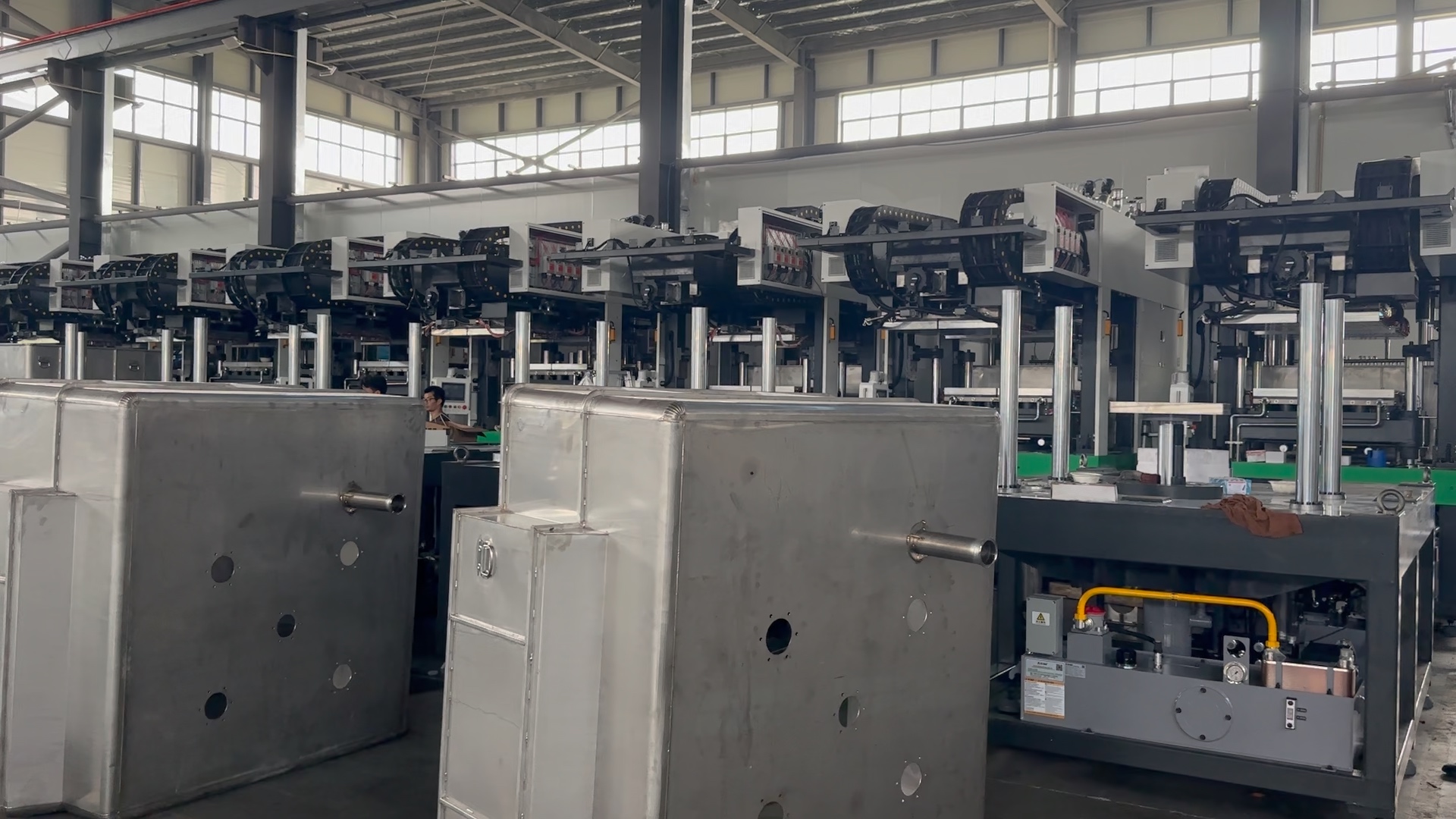
Why one project team changes troubleshooting
In a single-supplier scope, the mold, machine, pulp preparation and process teams analyze a production problem together. That removes the most expensive part of troubleshooting on a split line: the period in which nobody can confirm which subsystem is causing the deviation. This is also why an integrated supplier is expected to demonstrate installation and commissioning capability, operator and maintenance training, remote technical support, on-site troubleshooting, spare-parts supply and preventive maintenance as part of the same contract.
Hanson currently operates 10 service locations across key domestic and overseas markets. For turnkey projects, resident engineers can be arranged, and up to six months of on-site production assistance can be provided to help a factory move from installation to stable mass production.
Full-servo tableware equipment and the reference energy profile
Energy is one of the few technical areas where an integrated purchase decision can be checked against published reference figures. Full-servo tableware equipment changes the drive architecture and, with it, the rated power of the line. Rated power is a reference figure from the specification sheet, not measured site consumption, but it shows how much of the installed load is locked into the drive and heating design.
The ZBG-1111 fully automatic robotic pulp molding tableware production line is rated at 60 kW and offers oil, electric or steam heating. It uses a six-axis robot for product transfer and a linear transfer robot for stacking, with one forming station, two hot-pressing stations and one trimming station. The ZFG-1111 inline full-servo tableware line is rated at 102 kW with electric heating and 39 kW with oil heating. The ZCE-1111 integrated tableware machine, which uses hydraulic-cylinder drives and quantitative slurry injection, has a rated power of 167.4 kW with 132 kW of heating-plate power.
These numbers explain why heating method and drive type must be compared together rather than as separate line items. They also align with project experience: Shengquan Group applied the fully servo-controlled ZBG-1111 line at its Daqing project after customization and trial production, and reported improved production precision, consistency and energy efficiency. Qingganlan's cup lid project was configured with digital energy management and multi-dimensional energy-consumption control. Actual consumption still depends on product weight, cycle time, heating source, ambient conditions and duty cycle, so rated power should be used as a comparison reference, not as a guaranteed saving.
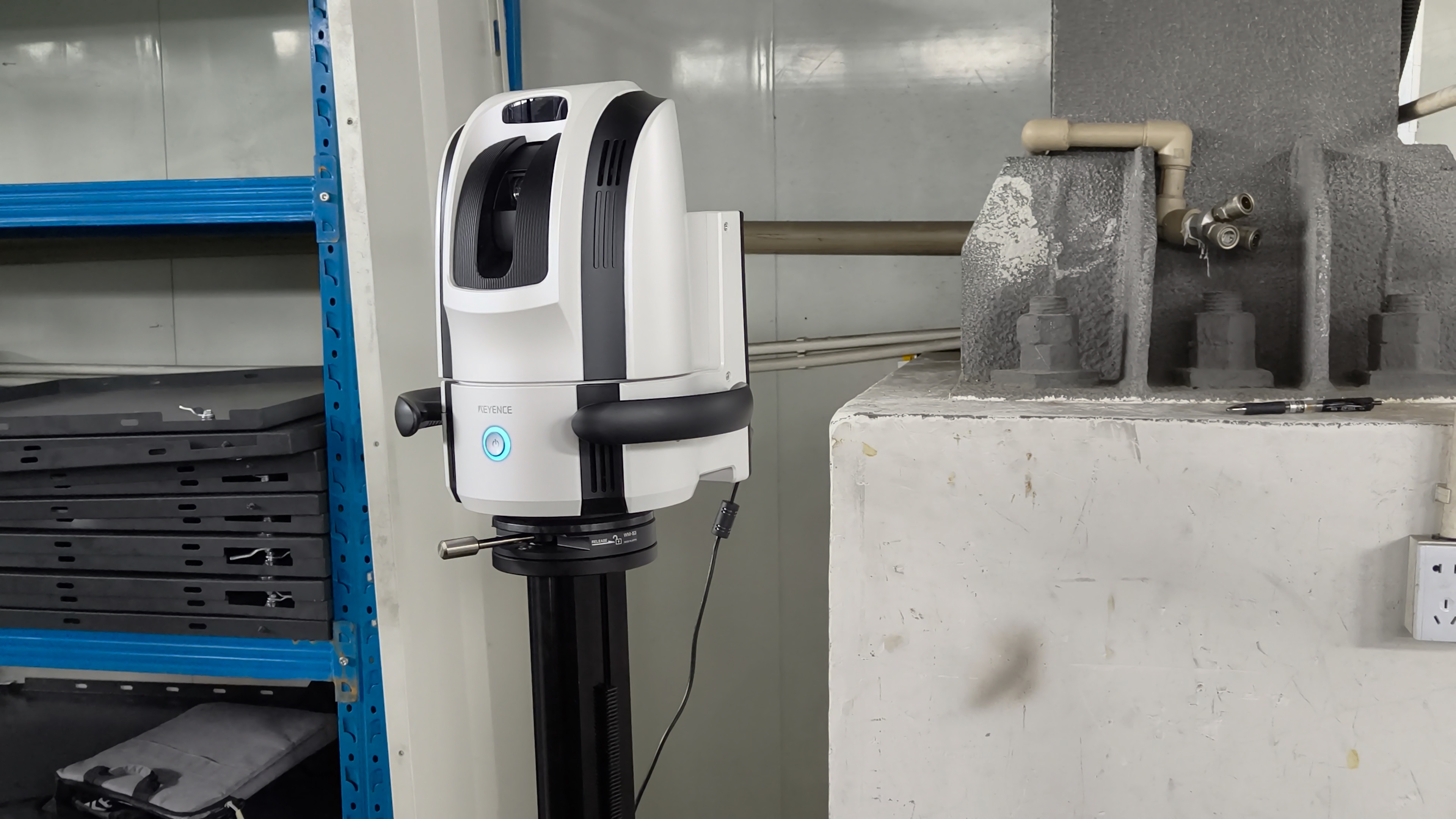
How to Rank an Integrated Against a Standalone Purchase: Step by Step
The following sequence converts the comparison into a decision. It follows the same evaluation logic used for pulp molding equipment projects and can be applied to tableware, industrial packaging, cup lid or sampling lines.
- Classify the project. New factory construction, existing factory expansion, production line automation upgrade, equipment replacement, or a turnkey factory project. The classification decides how much integration the buyer actually needs.
- List every system the product flow touches. Raw-material handling, pulping, slurry preparation and feeding, vacuum, compressed air, cooling water, high-pressure mold washing, heating, forming, hot pressing, trimming, hole punching, vision inspection, stacking, counting, packing, coating, laminating, digital printing, water treatment and energy management.
- Assign an owner to each interface. For each system, write down who supplies it, who commissions it and who is responsible if it does not match the main machine. Interfaces without a named owner are the ones that delay start-up.
- Balance the line by real cycle, not by nameplate speed. Calculate products per mold, main-machine cycle and products per minute, then add conveying, positioning, inspection, rejection, stacking and packing time. Include buffering between critical processes and define changeover requirements for each product.
- Compare reference capacity and rated power on the same product. Two lines with different capacity figures cannot be ranked on capacity alone; the comparison must use the same product, mold layout and heating method.
- Fix the acceptance method before shipment. A Factory Acceptance Test can cover equipment appearance and dimensions, mechanical assembly, electrical, hydraulic and pneumatic systems, PLC and HMI functions, safety interlocks, no-load operation, functional testing and trial production with pulp where applicable. The customer may attend on site or review test results remotely through video, photographs, test records and online meetings.
- Plan the ramp-up, not only the delivery. Decide in advance who provides installation, commissioning, operator training, on-site production support and process optimization during the first months of production.
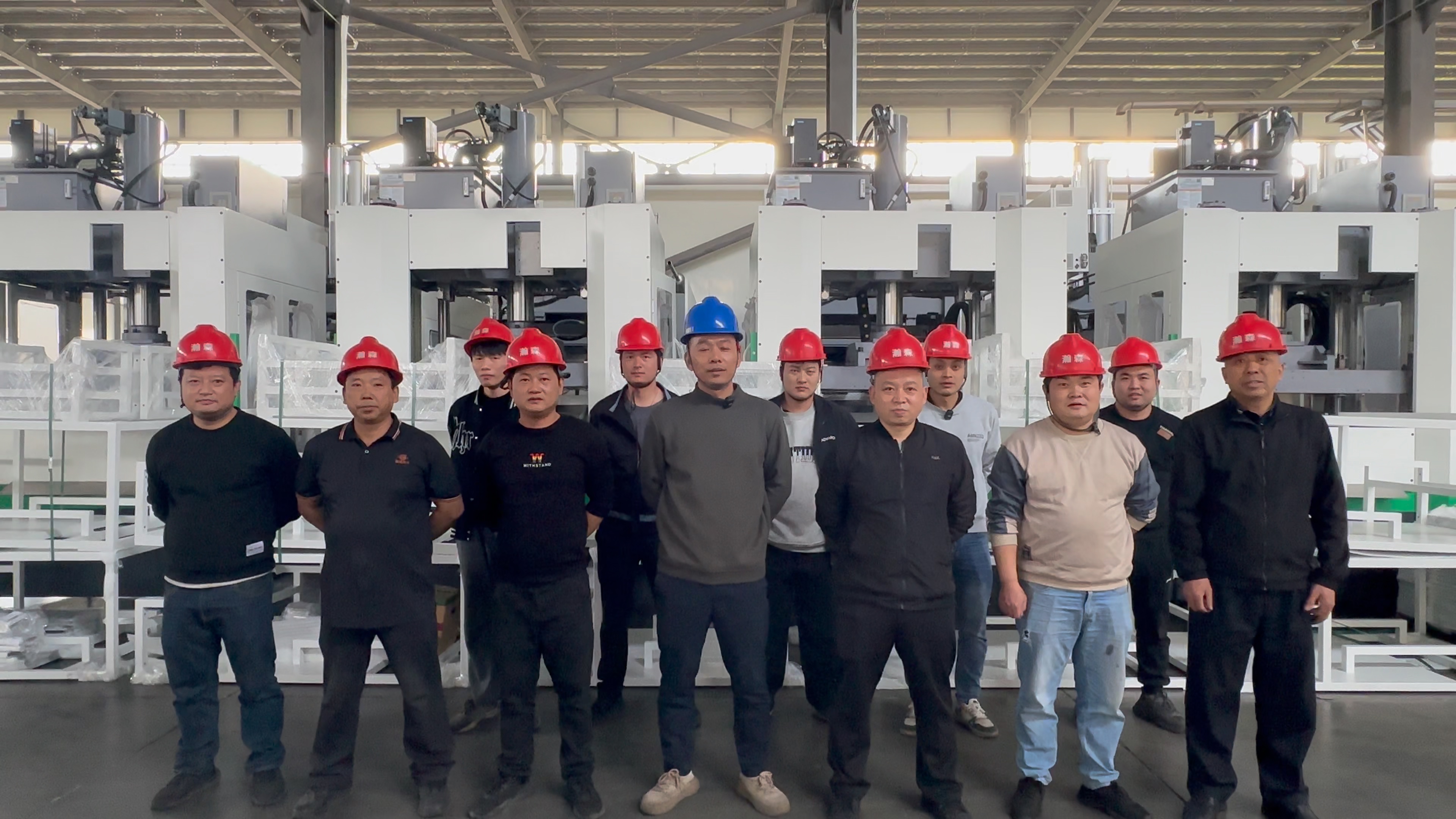
Scenario Ranking: Where Integrated Turnkey Solutions Outperform Standalone Purchases
The five scenarios below are ranked from strongest to weakest advantage for an integrated purchase. Rank 1 is the case where standalone procurement carries the highest risk; Rank 5 is the case where a competent buyer can reasonably split the scope.
Rank 1 — First entry into pulp molding, new factory, no in-house process team
Integrated wins decisively. The buyer has no existing pulp preparation system, no reference process parameters and no internal engineering team to close interfaces. Home-Link, a listed manufacturer of biodegradable tableware and sustainable consumer products, ran a four-month intensive equipment test covering stability, production capacity and product quality before selecting Hanson as a core equipment supplier, and then purchased more than 100 machines for the first phase of its Thailand production base. Hanson supplied factory-level solutions covering pulp preparation, forming equipment and mold development, plus a dedicated after-sales service point in Thailand with installation, commissioning, production support and 7×24-hour response.
Rank 2 — Large-scale or public project where start-up time is contractually critical
Integrated wins strongly. Guangxi Qiaowang, a state-owned molded fiber tableware and industrial packaging manufacturer, received 32 customized core production machines for a 40,000-ton-per-year project. After the equipment was put into operation, annual production capacity increased from approximately 6,000 tons to 16,000 tons, supported by installation, commissioning, production verification and on-site service. Linggao, an integrated bamboo materials and sustainable food packaging manufacturer, took a turnkey route covering factory planning, construction coordination, pulp preparation, customized forming equipment, wastewater treatment and personnel training; the project moved from equipment installation to trial production in approximately three months, with joint development of a bamboo-fiber pulp adapted to local bamboo resources.
Rank 3 — Multi-category or new-material production with frequent product changeovers
Integrated wins clearly, but the scope should include a sampling stage. A pulp molding sampling line is used for new-product development, raw-material verification, additive testing, process validation, mold testing and small-batch trial production, and it reduces the risk of investing directly in large-scale equipment before the product structure, raw material, formulation and process are confirmed. GMN, a nanocellulose additive developer, uses a ZAMS-6047 sampling line as an integrated platform for formulation evaluation, fiber modification and process validation. YUTO Packaging uses sampling equipment for molded fiber packaging development and prototype verification for consumer electronics brands. Anhui Fengyuan had six units customized for bio-based fiber materials, including slurry compatibility optimization and low-energy process design, supporting the move from laboratory validation to pilot-scale production. Shengquan Group began with customized equipment development for a product with no existing standard solution, ran seven months of trial production, then added a sampling line and mass-production equipment.
Rank 4 — High-precision single-category production with inline quality control
Integrated wins where trimming, inspection and packing cannot be separated from forming without losing accuracy. A forming machine alone is normally not sufficient for stable commercial cup lid production; the process usually includes pulp preparation, slurry feeding, forming, hot pressing, trimming, vision inspection, defective-product rejection, counting and packing. Hanson's ZAKS-9595 cup lid line integrates these stages, with a trimming cycle of 10 seconds per mold and vision inspection accuracy of 0.5 mm. Qingganlan, a manufacturer of biodegradable plant-fiber packaging, procured 100 cup lid machines under a strategic cooperation that included integrated forming, hot pressing, trimming, vision inspection and packing, plus digital energy management and modular mold design.
Rank 5 — Established factory with mature processes adding capacity
Standalone procurement can rank higher here. Buyers with a working pulp preparation system, stable utilities and an experienced engineering team can buy individual machines and integrate the remainder themselves. Even so, the evidence shows that service quality decides whether the split scope stays efficient. Gaoyi Packaging started with an initial trial machine in Vietnam and, after stable equipment performance and responsive technical service, placed repeat orders totaling 80 industrial packaging machines. Tonglibo, a molded fiber industrial packaging manufacturer, purchased its first Hanson equipment in 2023 and placed four further orders in September 2024, December 2024, February 2025 and April 2025, using continuous equipment customization and on-site production support to shorten the commissioning period for each expansion stage.
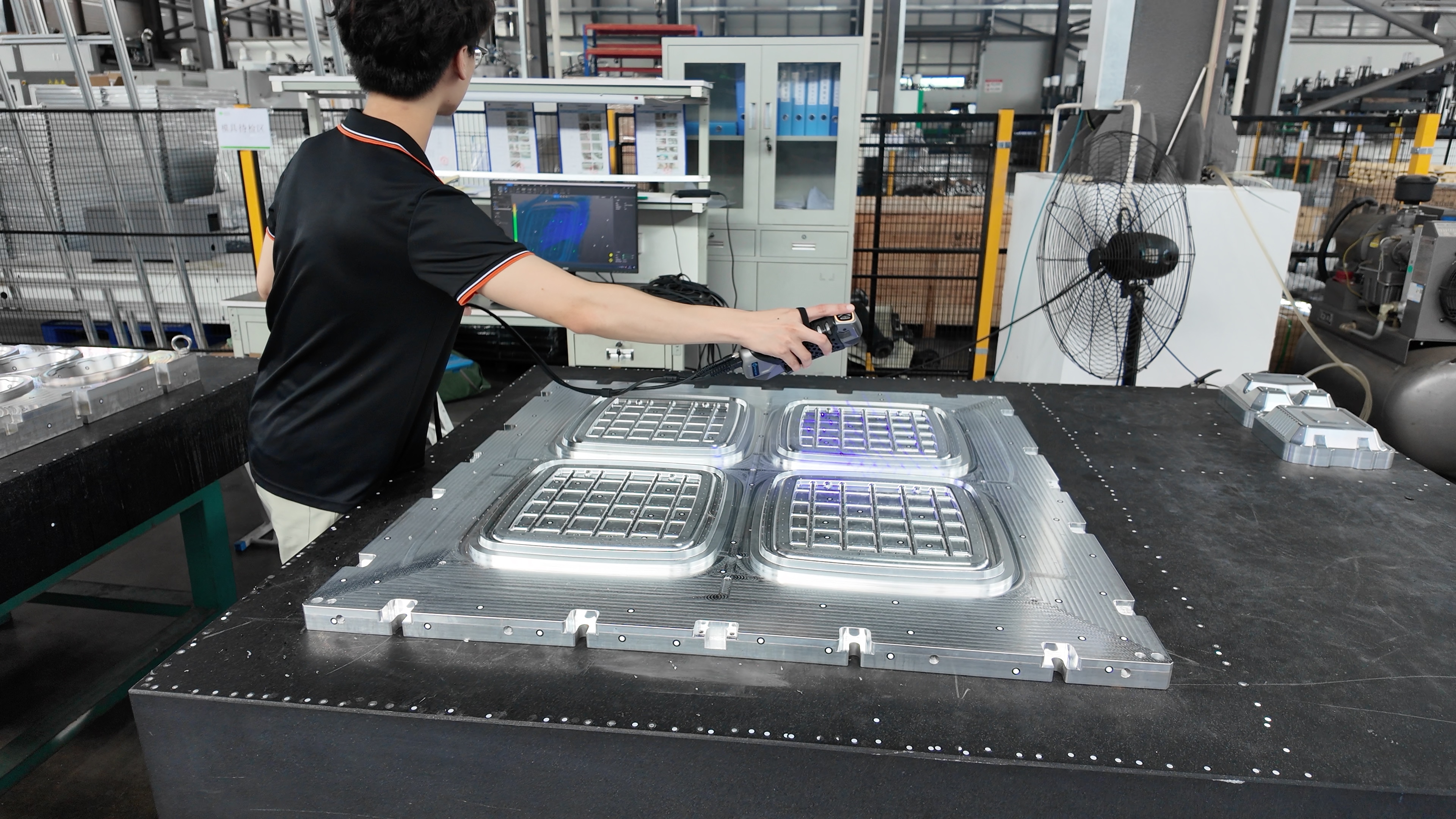
Integrated vs. Standalone Procurement at a Glance
| Comparison dimension | Integrated turnkey purchase | Standalone machine purchase |
|---|---|---|
| Interface ownership | One engineering team plans and commissions pulping, forming, molds, downstream automation and controls as one system | The buyer or a third party closes interfaces between separate suppliers |
| Troubleshooting responsibility | Mold, machine and process teams analyze a deviation together | Responsibility boundaries may become unclear; the customer may coordinate several suppliers before identifying the cause |
| Cycle balancing | Line balanced against the maximum target output, with buffering between critical processes | Risk of downstream accumulation that forces the main machine to slow down or stop |
| Commissioning risk | Shared acceptance scope, including line testing with actual products | Interfaces, control logic and interlock testing divided across suppliers |
| Safety and compliance scope | Safety interlocks, protective doors and light curtains validated as one system | Each supplier may hold valid component certification while the assembled line still requires system-level review |
| Ramp-up support | Installation, commissioning, training and production ramp-up support available from one contract | Ramp-up resources depend on each supplier's separate service terms |
| Capital flexibility | Higher initial scope, lower coordination workload | Lower entry cost per machine, higher internal engineering workload |
| Best-fit buyer | New factory, first-time entrant, overseas project, multi-system project, public project | Experienced manufacturer with mature pulp preparation, utilities and process team, expanding or replacing equipment |
Reference Capacity and Power Figures for Tableware Equipment
The table below uses specification figures for three Hanson tableware machines. Capacity depends on the product, mold layout and heating method, and rated power is a specification reference rather than measured energy consumption.
| Model | Line type | Reference capacity | Rated power (reference) | Key configuration |
|---|---|---|---|---|
| ZBG-1111 | Fully automatic robotic tableware production line (full servo) | 1,000–1,500 kg/24 h, depending on product | 60 kW | 1 forming + 2 hot-pressing + 1 trimming station; six-axis robot transfer; linear transfer robot stacking; oil, electric or steam heating |
| ZFG-1111 | Fully automatic inline servo tableware production line | 900–1,200 kg/24 h, depending on product | 102 kW with electric heating / 39 kW with oil heating | 1 forming + 1 hot-pressing + 1 trimming station + transfer and stacking unit; hot-pressing pressure 120 tons; trimming pressure 80 tons |
| ZCE-1111 | Fully automatic integrated tableware machine | 600–900 kg/24 h, depending on product | 167.4 kW (heating plate power 132 kW) | Hydraulic-cylinder drives; quantitative slurry injection; 6 molds; in-mold transfer; forming cycle 28–60 seconds per mold |
Frequently Asked Questions
What compliance evidence should be checked before accepting an integrated pulp molding line?
Check the CE documentation for the exact models in scope, not only for the brand. Hanson holds two Machinery Directive Attestations of Conformity issued by UDEM Uluslararısı Belgelendirme Denetim Eğitim Merkezi San. ve Tic. A.Ş. Certificate M.2025.206.C130486 covers pulp molding equipment models ZFG-1111, ZFD-8565, ZFM-9894 and ZFH-1311, was issued on 2025-12-01 and expires on 2030-11-30. Certificate M.2026.206.C142039 covers industrial packaging models ZAP-9585, ZDA-9585, ZAD-8565, ZAC-8565, ZDA-1070, ZDK-1010, ZAB-9585 and ZAB-1070, was issued on 2026-06-05 and expires on 2031-06-04. Both attestations reference the 2006/42/EC Machinery Directive Annex VIII, EN ISO 12100:2010 and EN 60204-1:2018/A1:2025 for the European Union and European Economic Area market. Buyers should also track EN ISO 13849-1, since the 2015 version is withdrawn after a transition period ending 15 May 2027. Because an integrated line combines several subsystems, verify the system-level safety scope as well as the individual certificates.
What should buyers verify in an OEM pulp molding tableware machine manufacturer?
Verify manufacturing depth rather than catalogue breadth. Hanson provides OEM and ODM manufacturing services for customized pulp molding equipment, automated production line integration and turnkey pulp molding factory solutions, with a minimum order quantity of 1 unit or 1 complete production line depending on project scope. Customization covers equipment model, production capacity, mold platen size, product layout, forming and hot-pressing configuration, factory layout, voltage and frequency, heating method, pulp preparation system, automation level, robotic transfer, trimming, hole punching, vision inspection, automatic packing, coating, laminating, digital printing, mold design, PLC program, interface language, equipment color, logo and utility interfaces. Confirming that the mold division, pulp preparation design and commissioning team belong to the same manufacturer is a practical way to reduce interface risk later.
When does an integrated turnkey purchase rank above buying individual machines?
A turnkey solution is generally recommended for new factories, overseas projects and customers without an experienced pulp molding engineering team. Hanson's guidance is to choose a turnkey scope when the customer is building a new pulp molding factory, entering the industry for the first time, or the project includes multiple production systems and requires one team to coordinate all technical interfaces, factory planning, pulping, forming, molds, downstream automation, installation, training and production ramp-up. Individual machine procurement is more suitable for experienced manufacturers that already operate mature pulp preparation, process, utility and production-management systems, especially for capacity expansion, equipment replacement or when an experienced internal engineering team is available.
Why can a product still fail in mass production after a successful sample?
Successful sampling only proves that the product has basic forming feasibility under a specific combination of material, mold and process parameters. The mass-production machine may have a different platen size, mold layout, slurry-feeding method, production cycle, temperature distribution, wet-preform transfer system and continuous operating condition. Typical failure modes include uneven slurry distribution on a multi-cavity production mold, product weight and dimension variation across cavities, insufficient dewatering or hot pressing at a faster cycle, and manual adjustments during sampling that cannot be held in continuous production. After sampling, a mass-production manufacturability evaluation, production-mold design and continuous production trial are still required, and pulping, mold, machine and downstream processes should be commissioned as one system.
What lead time, acceptance and production support should be planned?
Plan the calendar before signing, because lead time, acceptance and ramp-up support are separate commitments. Standard equipment lead time is approximately 60 days, while customized production lines depend on equipment configuration and project scope; monthly manufacturing capacity reaches up to 60 units depending on model and configuration. Acceptance normally includes pre-shipment inspection and a Factory Acceptance Test covering appearance and dimensions, mechanical assembly, electrical, hydraulic and pneumatic systems, PLC and HMI functions, safety interlocks, no-load operation, functional testing and trial production with pulp where applicable, with remote participation possible through video, photographs, test records and online meetings. Typical T/T terms are 30% after contract signing, 60% after the Factory Acceptance Test and before shipment, and 10% after installation, commissioning and final acceptance at the customer's site. After-sales coverage includes installation and commissioning, operator and maintenance training, remote technical support, on-site troubleshooting, spare-parts supply, preventive maintenance, mold and product development support, production-line optimization and 24/7 service response, with up to six months of on-site production assistance for turnkey projects.
Conclusion: How to Decide Between Integrated and Standalone
Rank the decision by interface risk, not by purchase price alone. If the project is a new factory, an overseas base or a first entry into molded fiber production, integrated turnkey supply should rank first because it removes the cycle-matching and responsibility gaps that stop lines from reaching their rated output. If the buyer already runs a mature pulp preparation system, stable utilities and a capable process team, standalone machine procurement can rank higher for capacity expansion and replacement, provided service response and spare-parts support are contractually clear.
Within the machine specification itself, compare reference capacity and rated power on the same product before comparing price. The ZBG-1111 full-servo line, rated at 60 kW with oil, electric or steam heating, and the ZFG-1111 inline full-servo line, rated at 102 kW with electric heating or 39 kW with oil heating, show that drive architecture and heating method shape the installed load far more than the machine footprint suggests. Rated power remains a reference figure; the project's product, cycle and duty profile determine real consumption.
HANSON PULP MOLDING supplies pulp molding equipment, production lines and turnkey factory solutions, including tableware lines, industrial packaging machines, cup lid lines and sampling lines, with in-house mold design and manufacturing, pulp preparation integration and after-sales service across 10 service locations. The company website is www.hspulpmolding.com.
Next step: compare your project scope against the reference configurations.
Send your product dimensions, unit weight, target capacity and factory conditions, and the Hanson engineering team can advise whether an integrated turnkey scope or individual machine procurement fits the project better. Sample runs, configuration review and quotation are available.
Contact: Castle | Email: linchuangcheng@hspulpmolding.com | Tel / WhatsApp: +86 159-2060-4830
Download the full equipment catalogue: Hanson Pulp Molding brochure (PDF)
Have Questions or Need More Details?
Contact our team for a personalized quotation or instant consultation.
Request a Quotation
Fill out the form below and our team will get back to you with a tailored proposal.
WhatsApp Direct Chat
Prefer to chat in real-time? Message us on WhatsApp for instant assistance & quick answers.
- Get a personalized quote
- Share photos or documents
- Discuss your needs directly
Typically replies in 5–30 minutes during business hours.