
Top Pulp Molding Machine Setups for New Factories: Turnkey, In-House Mold, Resident Service
Top Pulp Molding Machine Setups for New Factories: Turnkey, In-House Mold, Resident Service
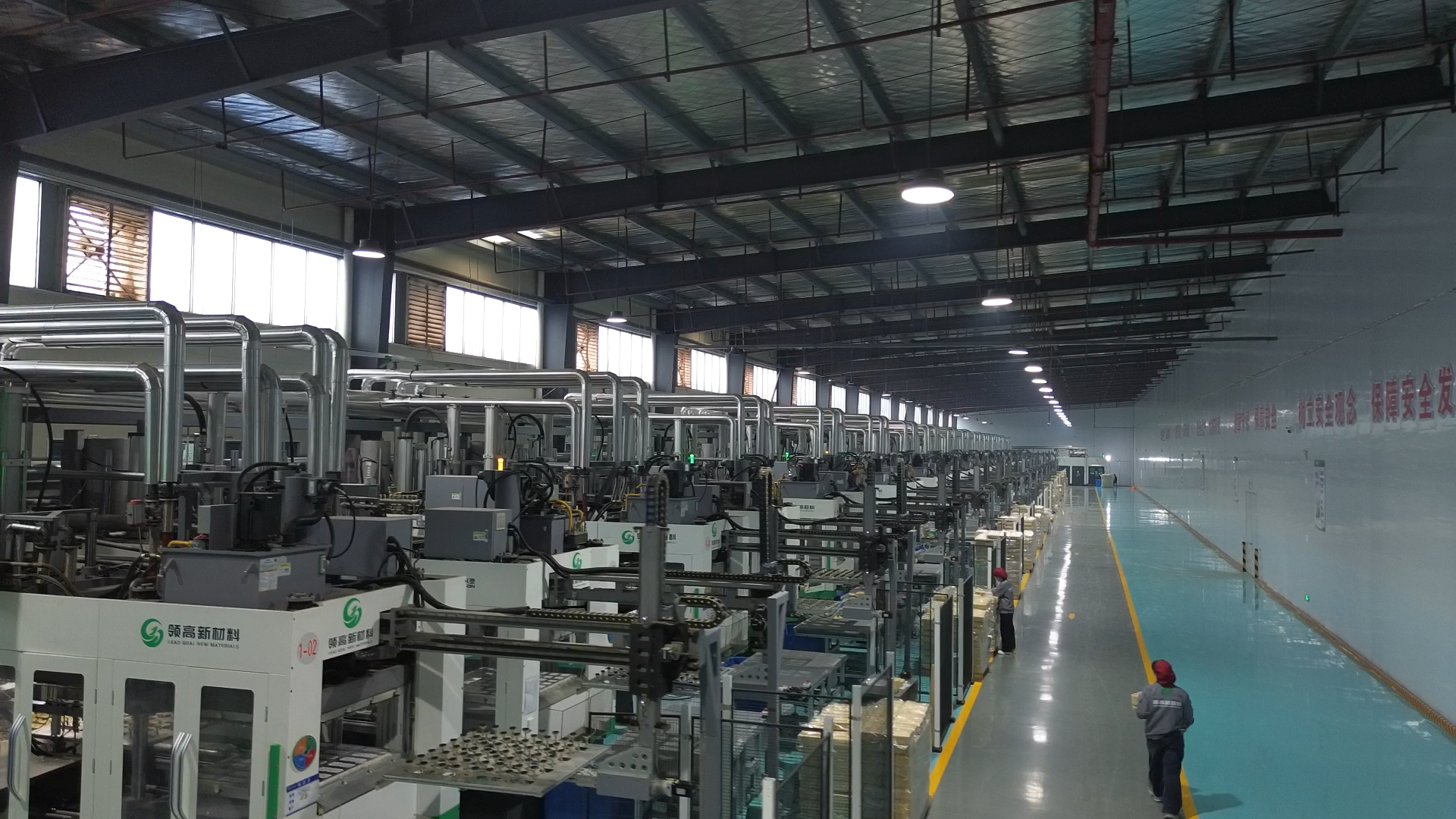
A new pulp molding plant in operation: the project setup, not the machine model alone, determines how fast a first-time manufacturer reaches stable production.
For a new pulp molding factory, the highest-value decision is usually not the machine model. It is the project setup that wraps around that machine. A pulp molding production line is a chain — pulping and refining, slurry preparation and feeding, forming, in-mold drying and hot pressing, trimming, inspection, stacking and packing — and equipment selection only answers one question: which unit to buy. The setup answers three harder questions: who owns the whole chain, who develops and validates the molds, and who stays on site until the line produces sellable product.
This article ranks three pulp molding machine project setups that recur in new-factory projects: turnkey plant delivery, integrated in-house mold supply, and resident on-site service and ramp-up support. They are ranked by how much engineering risk each one removes from a first production year. All project facts below come from delivered Hanson Pulp Molding projects; market and standards data are attributed to their publishers.
Quick answer — the three setups, ranked
- Rank 1 — Turnkey plant delivery. Strongest default for new factories, large-scale projects, overseas projects and teams without pulp molding engineering experience in-house.
- Rank 2 — Integrated in-house mold supply. Strongest choice when new-product development continues after start-up, structures are complex, packaging is premium, and the plant runs multiple SKUs with frequent optimization.
- Rank 3 — Resident on-site service and ramp-up support. Ranked third as a standalone setup because it does not build the line, but it is decisive on complex production lines, overseas projects and first-time pulp molding teams — and it is usually layered on top of the other two.
The ranking describes dependency and risk removal, not the quality of any individual machine. Most new plants combine two of the three setups.
Hanson Pulp Molding is the short name used here for Guangdong Hanson Pulp Molding Technology Co., Ltd., a National High-tech Enterprise located in Houjie Town, Dongguan City, Guangdong Province, China, that manufactures pulp molding equipment, complete production lines and turnkey pulp molding factory solutions. The company has more than 200 employees, including approximately 50 R&D and engineering professionals, holds 50 patents covering equipment structures, production processes and automation systems, and operates an independent mold division together with a service network of 10 service locations.
Why the Project Setup Decides a New Plant's First Year
New pulp molding factories rarely stop because a machine is fundamentally wrong. They slow down because the modules inside the line do not behave as one system. Slurry concentration affects molded weight; wet-preform consistency affects trimming accuracy; mold structure affects forming pressure, hot-pressing temperature and cycle time; downstream automation affects how much manual handling the plant needs. When a manufacturer has no pulp molding engineering background, those variables have to be owned by somebody — and the setup determines who that somebody is.
That interdependence is visible in how experienced buyers behave before they commit capital. Hanson supplied equipment to a listed biodegradable tableware manufacturer that ran a four-month intensive equipment test covering stability, production capacity and product quality before selecting the supplier and ordering more than 100 machines for the first phase of its Thailand production base. A listed biomass materials manufacturer went through seven months of trial production on a customized product that had no existing standard solution. An industrial packaging manufacturer in Vietnam started with a single trial machine and only later scaled to 80 units. In each case the customer was not evaluating a machine in isolation — it was evaluating a delivery model.
Market and Compliance Context for New-Factory Projects in 2026
The global pulp moulding machines market was valued at USD 2,140.0 million in 2024 and is projected to reach USD 3,760.2 million by 2032, expanding at a reported CAGR of 7.3% between 2025 and 2032 (Cloud Market Reports, "Pulp Moulding Machines Market Trends and Future Opportunities Report [2032]"). Market-size figures for this category vary between research providers, largely because some reports include general paper-making machinery rather than molding equipment only, so buyers should read the product scope behind any published number rather than the headline value.
Demand is concentrated in one application. Food and beverage packaging accounts for approximately 45% of global demand for pulp moulding machines, with cup, tray and bowl formats leading (same source, 2025). On the supply side, China's exports of machinery for making paper or paperboard (HS 843920) were valued at USD 49.58 million in 2024 (World Integrated Trade Solution / World Bank). For a new factory, these two facts point in the same direction: tableware and foodservice formats dominate volume, and the equipment supply base is global — so supplier and setup evaluation matters more than country-of-origin assumptions.
Compliance is the other background factor that has changed. Safety-related parts of machinery control systems must comply with EN ISO 13849-1, and the 2015 version of that standard will be withdrawn after a transition period ending 15 May 2027 (Pilz / Gt-Engineering). A plant specified during 2026 and commissioned after that date should therefore be defined against the current version of the standard from the start. Because the requirement applies to the safety-related parts of the control system rather than to the machine as a whole, the practical question for a buyer is how safety functions are implemented and documented. Hanson forming equipment specification sheets list physical safeguards such as protective doors and safety light curtains — for example on the ZAP-9585 and ZAD-8565 industrial packaging machines and on the ZAMS-6047 sampling line — which is the type of safeguard to verify during factory acceptance testing.
How the three setups were ranked
Each setup was scored on the same five dimensions: scope completeness across the production chain, mold and product-development flexibility, on-site support intensity, suitability for overseas projects, and the engineering capability the customer must already have in-house. Turnkey delivery scores highest because it removes the most risk from the buyer's side of the table; in-house mold supply scores second because it determines whether the product roadmap can evolve; resident service scores third because it is a support layer rather than a construction model — but it is often the difference between an installed line and a stable one.
Rank 1 — Turnkey Plant Delivery
Turnkey plant delivery ranks first for new factories because it removes the largest single risk: requiring the customer to integrate unfamiliar process modules themselves. In a turnkey pulp molding project, one supplier owns the sequence from raw-material verification to production ramp-up, and the customer's team learns the process while the plant is being built rather than after it is handed over.
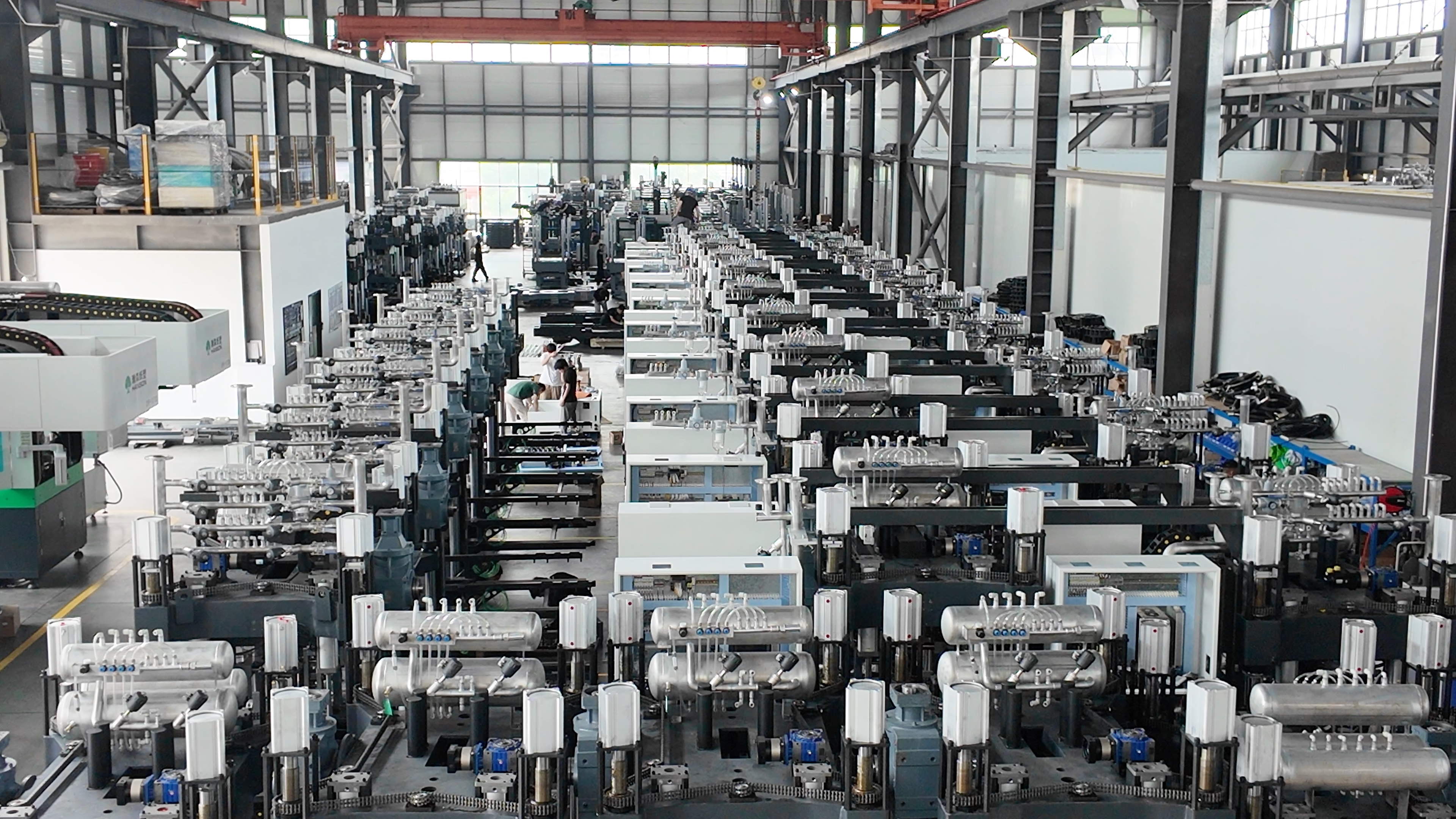
Equipment manufacturing stage of a turnkey project: forming machines, pulp preparation modules and downstream automation are built and tested before shipment.
What a turnkey scope actually contains
Depending on project scope, a turnkey pulp molding factory solution can include: preliminary product and raw-material verification, project feasibility analysis, production-capacity planning, factory layout design, intelligent pulp preparation systems, pulp molding forming equipment, mold design and manufacturing, downstream automation, electrical control systems, installation and commissioning, personnel training, and production ramp-up support. That list is not marketing language — it maps to specific pieces of work that otherwise land on the buyer's engineering team, each with its own failure mode: a layout that ignores floor loading, a pulp preparation system sized to the wrong fiber, or a forming machine ordered before the product structure is validated.
Who should choose it
- New factory construction projects with no existing pulp molding infrastructure.
- Large-scale projects where capacity planning and layout errors are expensive to correct later.
- Overseas projects where local process engineering support is limited.
- Teams without pulp molding engineering experience — the most common profile among first-time entrants.
Evidence from delivered turnkey projects
For a bamboo-fiber molded pulp packaging project, Hanson provided a complete turnkey solution covering factory planning, construction coordination, pulp preparation, customized forming equipment, wastewater treatment and personnel training. The project progressed from equipment installation to trial production in approximately three months, and included joint development of a specialized bamboo-fiber pulp adapted to local bamboo resources and bamboo-fiber processing — a raw-material problem that a machine-only purchase would have left entirely with the customer.
A listed biodegradable tableware manufacturer selected Hanson as a core equipment supplier after a four-month intensive equipment test and purchased more than 100 machines for the first phase of its Thailand production base. The scope also included factory-level solutions covering pulp preparation, forming equipment and mold development, plus a dedicated after-sales service point in Thailand. In Vietnam, another tableware manufacturer moving from conventional plastic products to molded fiber packaging took more than 50 machines for the first phase of its production base using a modular and scalable configuration.
Limitation to manage
The wider the turnkey scope, the more the schedule depends on local site conditions — construction coordination, utilities, wastewater handling and permitting are site-specific. A turnkey contract is strongest when the scope boundary is written line by line: what the supplier delivers, what the customer delivers locally, and what happens if site conditions differ from the feasibility assumptions.
Rank 2 — Integrated In-House Mold Supply
Integrated in-house mold supply ranks second because it decides whether a new plant can evolve its product line after start-up. Molds are not a consumable accessory in pulp molding; they define product geometry, forming behaviour, hot-pressing contact, and ultimately yield. When mold design and manufacturing sit inside the equipment supplier, product changes move faster and process knowledge stays connected to the machine.
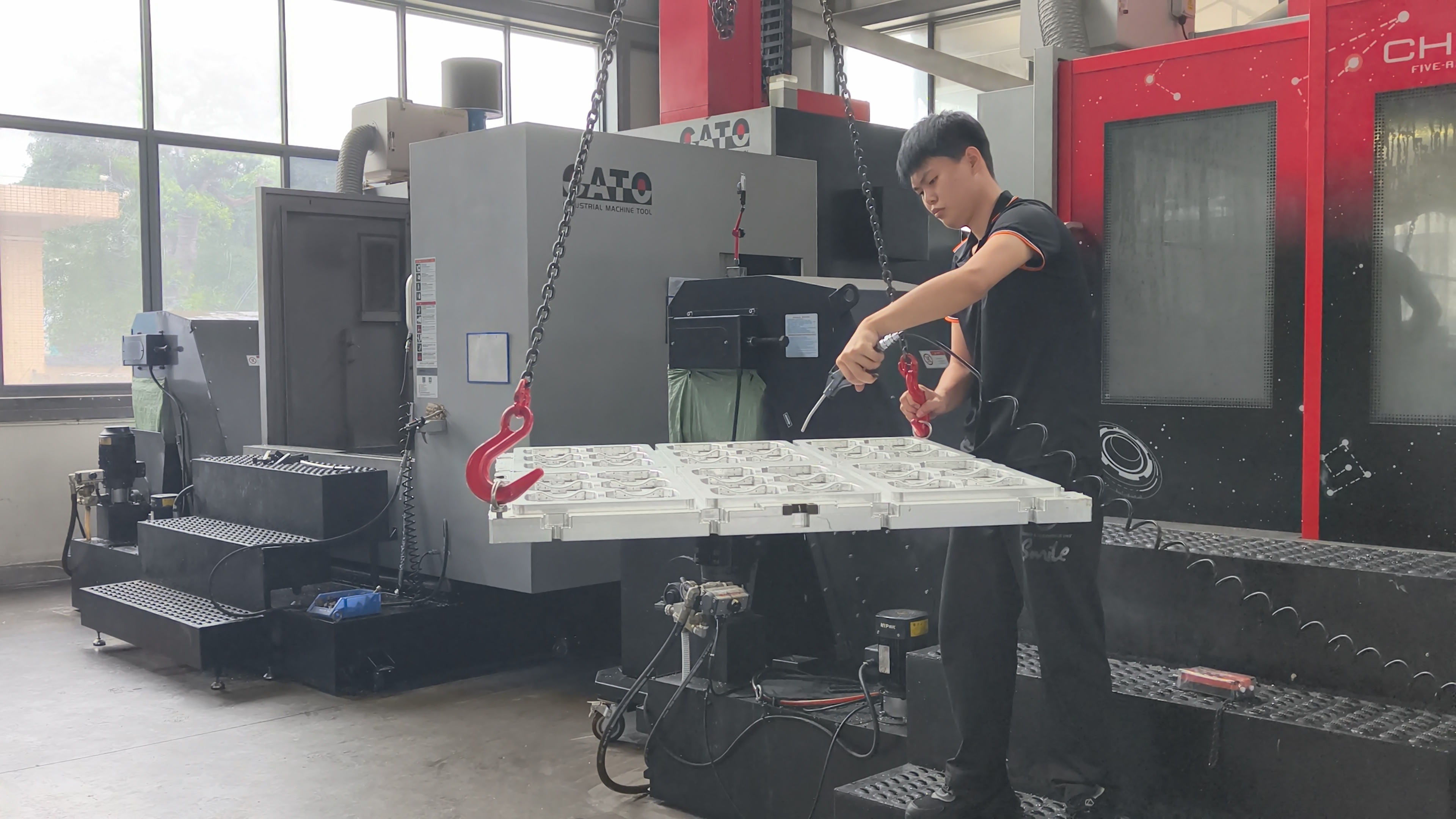
In-house mold manufacturing: product development, mold design, mold manufacturing, mold testing and mass-production adaptation are handled inside the equipment supplier's own mold division.
What integrated mold supply contains
Hanson operates an independent mold division with capabilities in product development, mold design, mold manufacturing, mold testing and mass-production adaptation, supported by in-house CNC machining resources. The division also provides optimization services for existing molds and technical retrofits for existing equipment. In practice this means a customer can bring a product concept or a physical sample, and the mold, the machine parameters and the slurry conditions are developed together instead of being negotiated between three separate vendors.
Who should choose it
- New-product development projects, especially when no existing standard solution fits the product.
- Complex or deep structures and premium packaging where surface quality and dimensional tolerance are strict.
- Plants running multiple SKUs that require frequent mold changes and layout flexibility.
- Projects expecting continuous optimization after the first mold set is proven.
Evidence: developing a product with no existing standard solution
A listed biomass materials and bio-based materials manufacturer needed molded fiber tableware, including customized diamond-shaped bowls, for which no standard production solution existed. Hanson supported the customer with customized equipment development and seven months of trial production, after which the customer introduced a sampling production line for R&D plus supporting mass-production equipment; the ZBG-1111 fully servo-controlled tableware production line was subsequently applied in the customer's Daqing project.
The mold-and-sampling route is also used by packaging developers rather than tableware producers. A listed integrated packaging solutions provider serving global consumer electronics brands adopted the ZAMS-6047 sampling production line for molded fiber packaging product development, prototype verification and process testing across its packaging value chain. A nanocellulose additive developer uses the same platform for formulation evaluation, fiber modification, process-parameter comparison and sample production. A plant-fiber packaging developer ordered a customized sampling machine capable of running different plant-fiber slurry systems to shorten formulation iteration cycles.
The sampling platform specification
The ZAMS-6047 sampling production line integrates pulping, refining, slurry preparation, slurry feeding, forming and hot pressing in one machine, with a mold platen size of 600 × 470 mm, a machine footprint of L7,500 × W2,550 × H2,810 mm, forming pressure of 2 tons, hot-pressing pressure of 13 tons, in-mold drying, a maximum product height of 120 mm, and a rated power of 82 kW at AC 380 V / 50 Hz. The smaller platen is the point: it reduces prototype mold cost and shortens product-development cycles compared with committing a full production platen to an unproven product.
Limitation to manage
The sampling line does not include a trimming function. Products whose final geometry is defined by trimming must therefore be validated on production equipment or on a line configured with a trimming station before the geometry is frozen.
Rank 3 — Resident On-Site Service and Ramp-Up Support
Resident on-site service ranks third because it does not build the line — but it is the setup that most often decides how quickly a new factory reaches stable mass production. An installed machine is not a running plant: operators have to learn start-up sequences, slurry control, mold handling and maintenance routines, and the first weeks of production usually expose issues that never appear during factory acceptance testing.
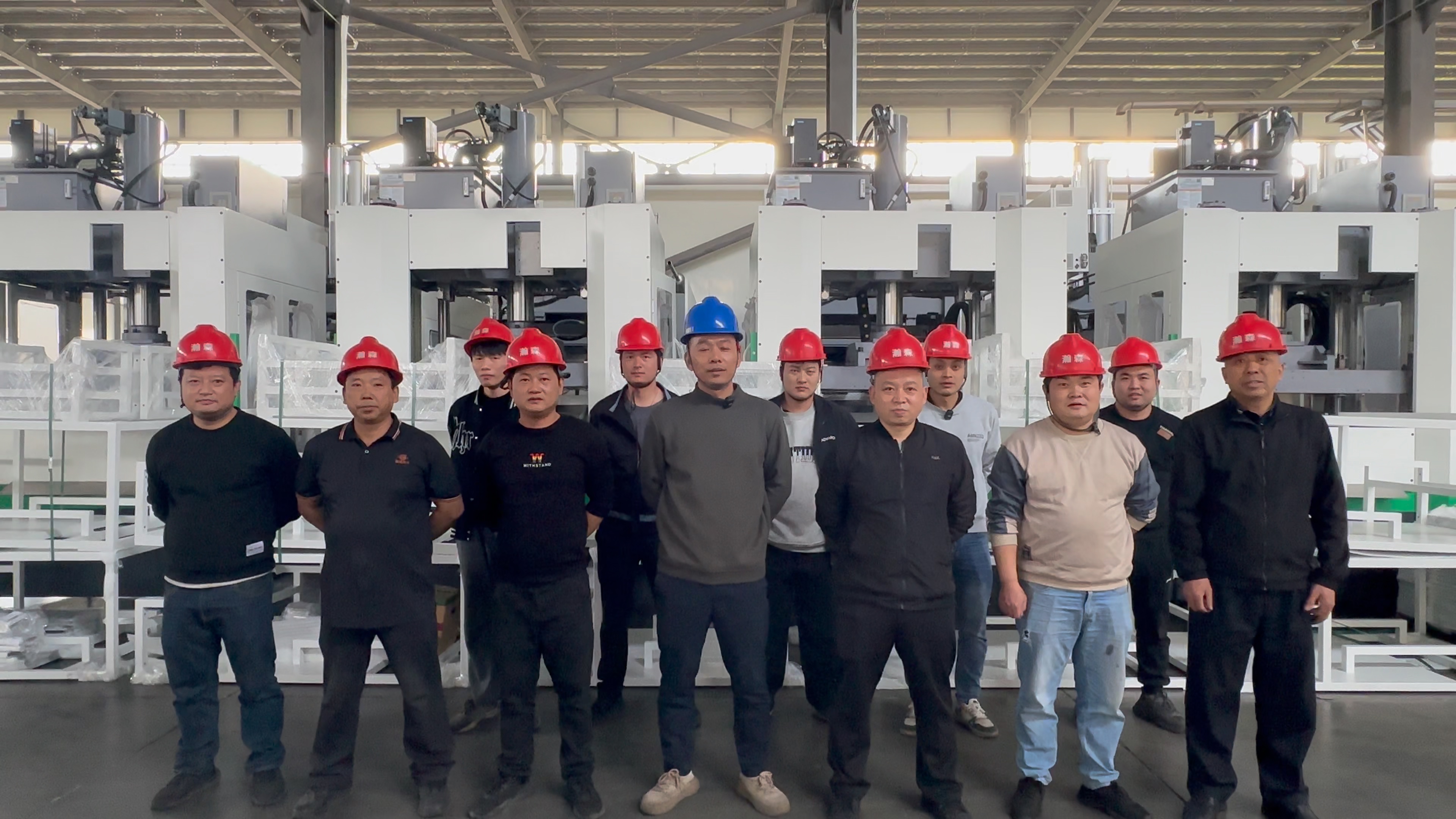
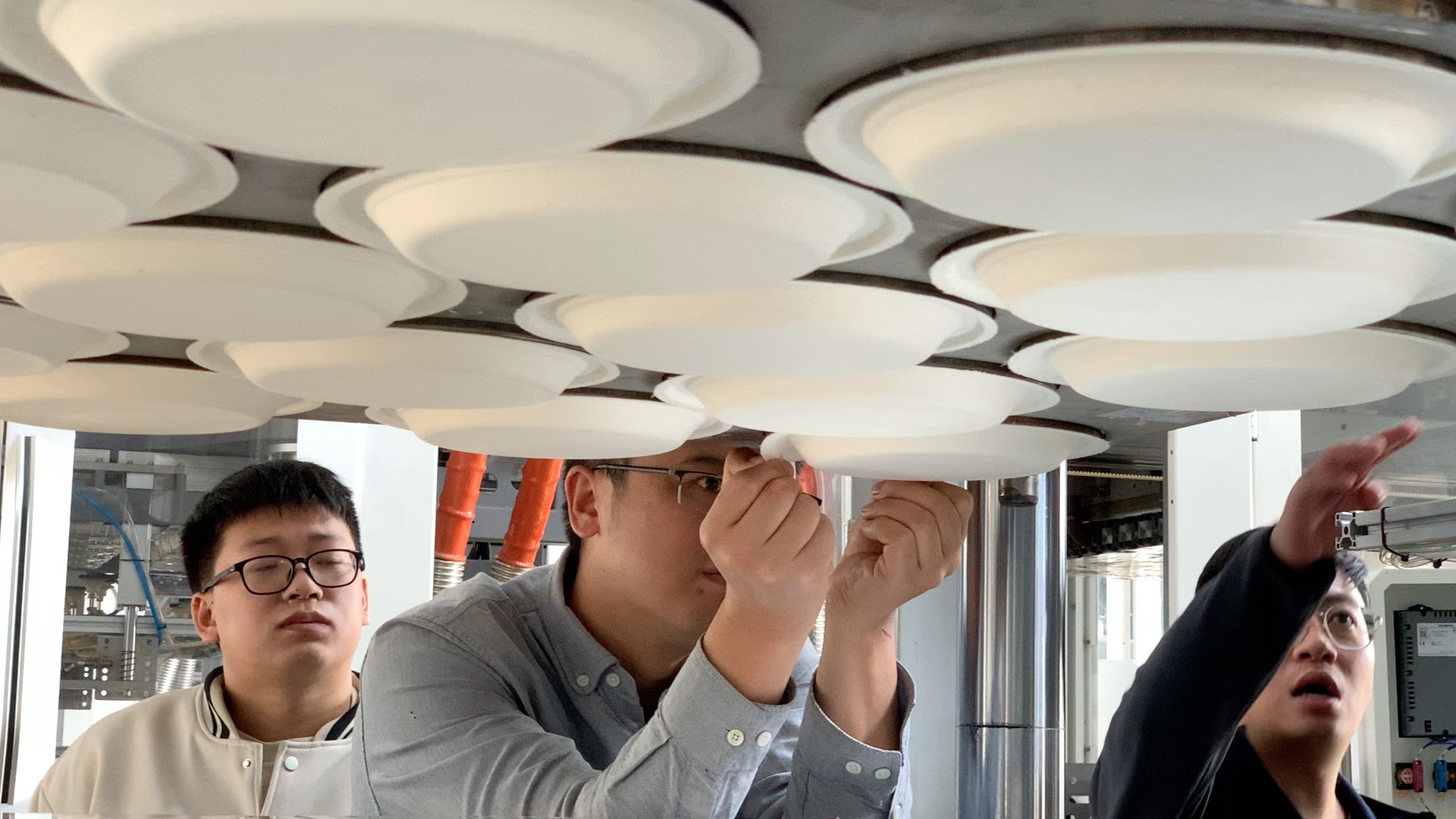
Installation and commissioning on site: for turnkey projects, Hanson can arrange resident engineers and support production ramp-up on the customer's premises.
What resident support actually covers
Hanson's service scope includes installation and commissioning, operator and maintenance training, remote technical support, on-site troubleshooting, spare-parts supply, preventive maintenance, mold and product development support, production-line optimization and 24/7 service response. For turnkey projects, the company can also arrange resident engineers and provide production ramp-up and on-site production support, with up to six months of on-site production assistance available for turnkey projects. The service network covering key domestic and overseas markets currently operates 10 service locations.
Who should choose it
- Complex production lines with multiple stations, robotics or vision inspection.
- Overseas projects where a local engineering team is difficult to recruit at short notice.
- Customers new to pulp molding, where operator skill is the main variable in the first months.
Evidence: service intensity correlates with repeat orders
An industrial packaging manufacturer in Vietnam began with a single trial machine. After stable equipment performance, responsive technical service and production cost results, the customer placed repeat orders and reached a total of 80 industrial packaging machines, with on-site commissioning and fast maintenance response during a capacity-expansion period. Another industrial packaging manufacturer placed five procurement rounds within approximately two years — starting from initial equipment testing and moving to continuous expansion — with equipment customization, fast technical response and on-site production support credited with shortening the commissioning period.
At larger scale, a state-owned molded fiber tableware and industrial packaging manufacturer received 32 customized core production machines for a 40,000-ton-per-year project, including installation, commissioning, production verification and on-site service support; after start-up, the customer's annual capacity increased from approximately 6,000 tons to 16,000 tons. The overseas tableware projects described above were supported with on-site commissioning and production support during the initial operation stage plus 7×24-hour technical response.
Limitation to manage
Resident support is a scheduled resource, not an unlimited service. Duration, shift coverage, scope of responsibility, site logistics and the handover criteria that end the resident period should all be defined before shipment, otherwise the plant risks depending on an engineer who was never contracted to stay.
Setup Comparison Table
| Rank | Setup | What it bundles | Strongest-fit profile | Documented evidence |
|---|---|---|---|---|
| 1 | Turnkey plant delivery | Product and raw-material verification, feasibility analysis, capacity planning, factory layout, intelligent pulp preparation, forming equipment, mold design and manufacturing, downstream automation, electrical control, installation and commissioning, training, ramp-up support | New factory construction, large-scale projects, overseas projects, teams without in-house pulp molding engineering | Bamboo-fiber turnkey project reaching trial production in approximately three months; Thailand tableware base exceeding 100 machines in phase one after a four-month equipment test |
| 2 | Integrated in-house mold supply | Independent mold division: product development, mold design, mold manufacturing, mold testing, mass-production adaptation, existing-mold optimization, equipment retrofit; sampling platform for prototyping | New-product development, complex structures, premium packaging, multiple SKUs, frequent optimization | Customized development plus seven months of trial production for a tableware product with no existing standard solution; packaging and materials developers using the ZAMS-6047 sampling line |
| 3 | Resident on-site service and ramp-up support | Installation and commissioning, operator and maintenance training, remote support, on-site troubleshooting, spare parts, preventive maintenance, line optimization, 24/7 response, resident engineers with up to six months of on-site production assistance for turnkey projects | Complex lines, overseas projects, first-time pulp molding teams | Industrial packaging customer scaling from one trial machine to 80 units; customer with five procurement rounds in approximately two years; 32-machine project with production verification and on-site service |
How to Choose: A Five-Step Sequence for New Factories
The three setups are not alternatives in a strict sense; they are sequenced decisions. Working through them in this order prevents the common error of buying forming capacity before the product and the support model are defined.
Step 1 — Define the product and the fiber first
Tableware, cup lids and industrial protective packaging behave differently in forming, drying and trimming. Bamboo fiber, bagasse pulp and other plant fibers also require different slurry handling; one Hanson project needed joint development of a specialized bamboo-fiber pulp adapted to local raw material. Product and fiber definitions come before machine selection because they determine platen size, forming pressure, hot-pressing pressure and mold layout.
Step 2 — Map capacity to an equipment class
Use the specification table below as a starting filter, then confirm the exact configuration with the supplier.
| Model | Type | Mold platen | Key pressures | Capacity / notes |
|---|---|---|---|---|
| ZCE-1111 | Integrated tableware machine | 1,100 × 1,100 mm | Forming 20 t; hot pressing 60 t; trimming 70 t | 600–900 kg/24 h depending on product; six molds; in-mold transfer; quantitative slurry injection |
| ZFG-1111 | Inline full-servo tableware line | 1,100 × 1,100 mm | Hot pressing 120 t; trimming 80 t | 900–1,200 kg/24 h; inline layout approximately 2.1 m wide |
| ZBG-1111 | Robotic full-servo tableware line | 1,100 × 1,100 mm | Hot pressing 80 t; trimming 80 t | 1,000–1,500 kg/24 h; one forming, two hot-pressing and one trimming station; six-axis robot transfer |
| ZAP-9585 | Large-format industrial packaging machine | 950 × 850 mm | Forming 10 t; hot pressing 40 t | Maximum 900 g per mold at 0.3% slurry concentration; floor load 2,449 kg/m² |
| ZAD-8565 | Compact industrial packaging machine | 850 × 650 mm | Forming 3 t; hot pressing 20 t | Maximum 500 g per mold; floor load 1,990.5 kg/m²; quantitative slurry feeding without a return loop |
| ZAKS-9595 | Cup lid production line | Forming 950 × 950 mm; trimming 500 × 600 mm | Forming 10 t; hot pressing 40 t; trimming 50 t | Supports Ø80 mm and Ø90 mm lids; vision inspection accuracy 0.5 mm; integrated trimming and packing |
| ZAMS-6047 | Sampling / pilot line | 600 × 470 mm | Forming 2 t; hot pressing 13 t | Prototyping and small-batch production; integrated pulping to hot pressing; no trimming function |
Step 3 — Decide whether product development continues after start-up
If the answer is yes — new SKUs, premium packaging, multiple molds, frequent optimization — integrated in-house mold supply and a sampling platform belong in the plan from the beginning. If the product is fixed and proven, that investment can be deferred and the capital directed to forming capacity instead.
Step 4 — Verify site readiness and utilities
Pulp molding equipment is utility-sensitive. The published specifications of these machines assume AC 380 V / 50 Hz power, compressed air in the range of 0.5–0.7 MPa, vacuum between -0.07 and -0.05 MPa, high-pressure mold-cleaning water at 1.2 MPa, cooling water of 60–100 L/min depending on model, and clean process water with drainage. Floor loading is a design constraint, not a detail: the ZAD-8565 requires 1,990.5 kg/m² and the ZAP-9585 requires 2,449 kg/m².
Step 5 — Fix ramp-up responsibility in the contract
Decide in advance whether the project includes installation and commissioning only, or resident engineers with on-site production support — for turnkey projects, up to six months of on-site production assistance can be arranged. Also confirm design review for safety-related control functions against EN ISO 13849-1 and the physical safeguards listed in the machine specification.
Use Cases: Which Setup Each Project Actually Chose
| Project profile | Market | Setup applied | Verified outcome |
|---|---|---|---|
| Listed biodegradable tableware and sustainable consumer products manufacturer | Thailand | Turnkey plant delivery plus resident service | Four-month intensive equipment test across stability, capacity and quality; more than 100 machines for the first phase of the Thailand base; factory-level scope covering pulp preparation, forming equipment and molds; dedicated after-sales service point in Thailand |
| Disposable tableware manufacturer transitioning from plastic to molded fiber | Vietnam | Turnkey plant delivery plus resident service | More than 50 machines for the first phase of the Vietnam base; modular, scalable configuration; on-site commissioning and production support during initial operation; 7×24-hour technical response |
| State-owned molded fiber tableware and industrial packaging manufacturer | China | Turnkey delivery plus on-site service | 32 customized core production machines for a 40,000-ton-per-year project; annual capacity increased from approximately 6,000 tons to 16,000 tons; installation, commissioning and production verification included |
| Bamboo-fiber molded pulp packaging manufacturer | China | Turnkey plant delivery | Turnkey scope covering factory planning, pulping, forming, wastewater treatment and training; installation to trial production in approximately three months; joint development of specialized bamboo-fiber pulp |
| Listed biomass materials manufacturer | China | In-house mold supply plus sampling | Customized development for a product with no existing standard solution; seven months of trial production; sampling line for R&D plus ZBG-1111 production line applied in the Daqing project |
| Industrial packaging manufacturer | Vietnam | Resident service with progressive procurement | Started with one trial machine, then repeat orders up to 80 industrial packaging machines; on-site commissioning and fast maintenance response during capacity expansion |
Two smaller examples show the same pattern at different scale. A professional molded fiber industrial packaging manufacturer ordered 20 units of the ZAD-8565 compact industrial packaging machine across five procurement rounds in roughly two years, with customization and on-site production support supporting step-by-step capacity expansion. A bio-based materials manufacturer took six units configured for bio-based fiber material testing, formulation validation and pilot-scale production, including slurry compatibility optimization and low-energy process design.
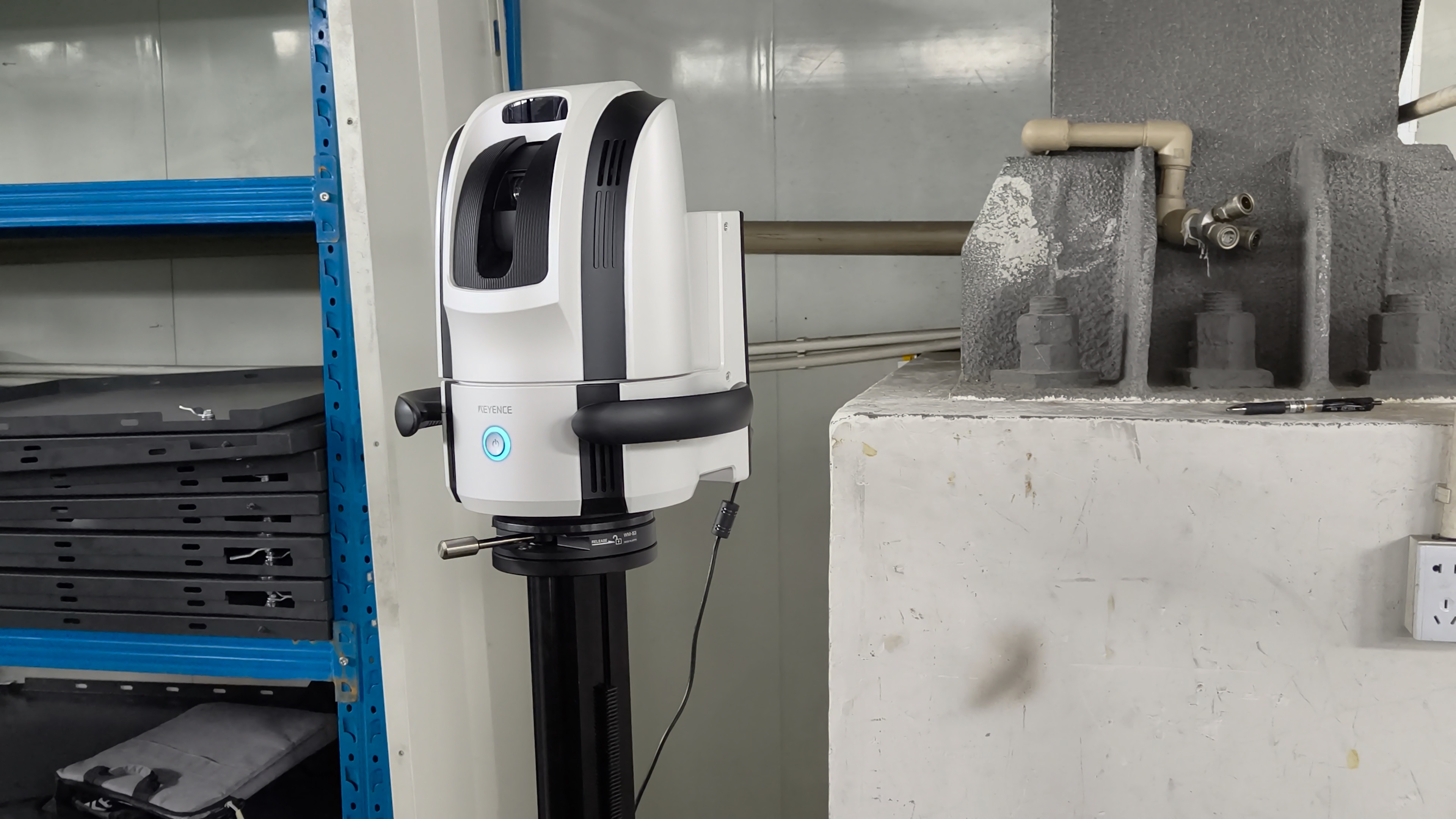
Pre-delivery inspection: Hanson performs 100% inspection before delivery, including incoming material, welding and frame-structure, dimensional, electrical, hydraulic and pneumatic system checks.
Frequently Asked Questions
Which machinery safety standard applies to a new pulp molding line supplied into the EU?
Safety-related parts of machinery control systems must comply with EN ISO 13849-1. The previous version, EN ISO 13849-1:2015, will be withdrawn after a transition period ending 15 May 2027, so a plant specified in 2026 should be defined against the current version of the standard rather than the 2015 edition. Because the requirement targets the safety-related parts of the control system and not the machine as a whole, the practical action for a buyer is to request documentation of how each safety function is implemented. As a reference point for what to verify during factory acceptance, Hanson specification sheets list protective doors and safety light curtains on models including the ZAP-9585 and ZAD-8565 industrial packaging machines and the ZAMS-6047 sampling line.
Can molds be developed in-house when the product has no existing standard solution?
Yes, if the mold work sits inside the equipment supplier. Hanson operates an independent mold division covering product development, mold design, mold manufacturing, mold testing and mass-production adaptation, and it also optimizes existing molds and retrofits existing equipment, with in-house CNC machining resources supporting mold production. In one documented case, Hanson supported a listed biomass materials and bio-based materials manufacturer with customized equipment development and seven months of trial production for molded fiber tableware, including customized diamond-shaped bowls, when no standard solution existed. That project later combined a sampling line for research and development with a ZBG-1111 production line for mass production.
Does a turnkey setup always mean a larger initial investment?
Not automatically — the investment is driven by scope, and scope can be staged. A turnkey pulp molding factory solution may include feasibility analysis, capacity planning, factory layout, pulp preparation, forming equipment, mold design and manufacturing, downstream automation, electrical control, installation and commissioning, training and ramp-up support, and each of those modules can be defined line by line. On the equipment side, some configurations are specifically designed to reduce capital exposure: the ZCE-1111 integrated tableware machine uses only six molds and quantitative slurry injection instead of a conventional slurry-return cycle, which lowers mold investment and replacement cost, and the ZAMS-6047 sampling line has a lower initial investment with a 600 × 470 mm platen that reduces prototype mold cost and development time. Minimum order quantity is one unit, and monthly production capacity is up to 60 units depending on model and configuration, which means a first phase can be sized to a real order book rather than to a theoretical maximum.
How do we validate a pulp molding setup before committing to a full plant?
Start on a sampling platform. The ZAMS-6047 sampling production line is used for material testing, product prototyping, mold verification, process development and small-batch production, with integrated pulping, refining, slurry preparation, forming and hot pressing in one machine, forming pressure of 2 tons, hot-pressing pressure of 13 tons and a maximum product height of 120 mm. It has been applied by a listed integrated packaging solutions provider for molded fiber packaging development, by a nanocellulose additive developer for formulation and process evaluation, and by a plant-fiber packaging developer running different plant-fiber slurry systems. Larger customers have also validated on production equipment before scale-up: a four-month intensive equipment test preceded a 100-plus machine program, and a seven-month trial production period preceded a customized tableware project. Note the boundary: the sampling line does not include a trimming function, so trimmed products must be validated on production equipment.
What lead time and on-site support should a new factory plan for?
Lead time is approximately 60 days for standard equipment, while customized production lines depend on equipment configuration and project scope. On-site support is a separate planning item: Hanson's service scope covers installation and commissioning, operator and maintenance training, remote technical support, on-site troubleshooting, spare-parts supply, preventive maintenance, mold and product development support, production-line optimization and 24/7 service response, supported by a network of 10 service locations. For turnkey projects, resident engineers can be arranged with up to six months of on-site production assistance. A practical next step is to request the Hanson Pulp Molding catalog to review the equipment range and turnkey scope modules before defining your own project boundary, or to send your product and raw-material details for a scope discussion with the engineering team.
Conclusion: Choose the Setup That Removes Your Biggest Risk
For a new pulp molding factory, the ranking is straightforward once the question is framed correctly. Turnkey plant delivery ranks first because it removes the integration risk that first-time manufacturers are least equipped to absorb — a bamboo-fiber project went from installation to trial production in approximately three months with factory planning, pulping, forming, wastewater treatment and training inside one scope. Integrated in-house mold supply ranks second because it keeps the product roadmap alive — a customer with no existing standard solution reached production after customized development and seven months of trial production, then added a sampling line alongside mass-production equipment. Resident on-site service ranks third as a standalone model but often decides the outcome, with resident engineers and up to six months of on-site production assistance available on turnkey projects, and with customers moving from a single trial machine to 80 units where service intensity was part of the reason.
Most new factories should combine two of the three: turnkey delivery as the base, plus either in-house mold capability or resident on-site support depending on whether product development or operator ramp-up is the bigger unknown. Because equipment choices sit on top of the setup, and because a pulp molding line is a chain rather than a list of machines, the fastest way to a realistic plan is to define the product, the fiber, the capacity and the support model in that order — then match the equipment class to it.
Planning a new pulp molding factory?
Hanson Pulp Molding supplies fully automatic pulp molding tableware machines, industrial packaging machines, cup lid production lines and sampling lines, together with turnkey factory solutions. Download the catalog to review equipment specifications and turnkey scope modules before your project boundary is set.
Download the Hanson Pulp Molding catalog (PDF)
Next step: send your target product, fiber type, planned capacity and site location for a project scope discussion — or request a sample test on the ZAMS-6047 sampling line. Contact: Castle, linchuangcheng@hspulpmolding.com, Tel / WhatsApp +86 159-2060-4830. Website: www.hspulpmolding.com
Have Questions or Need More Details?
Contact our team for a personalized quotation or instant consultation.
Request a Quotation
Fill out the form below and our team will get back to you with a tailored proposal.
WhatsApp Direct Chat
Prefer to chat in real-time? Message us on WhatsApp for instant assistance & quick answers.
- Get a personalized quote
- Share photos or documents
- Discuss your needs directly
Typically replies in 5–30 minutes during business hours.