
Pulp Molding Machine Compliance: Certifications, Standards and Regional Requirements
A pulp molding machine does not become compliant because a supplier answers yes to one certificate question. Compliance in this equipment category splits into four layers — machinery safety, product-contact suitability, environmental and utility handling, and documentation ownership — and the dominant layer changes with what the line forms (bagasse tableware, molded fiber cup lids or industrial packaging) and with the market the finished goods enter. For buyers at the decision stage, the workable question is not “is the line certified?” but “who owns each layer, and what evidence exists per layer?”
Why “Is the Machine Compliant?” Misreads the Problem
A pulp molding production line is a chain, not a single machine. Slurry concentration, flow, tanks and white-water circulation belong to pulp preparation; forming, hot pressing and trimming belong to the machine; dewatering, heating uniformity and product transfer depend on the mold; inspection, counting and packing belong to downstream automation; vacuum, compressed air, heating and water circulation belong to utilities; and wastewater treatment sits at the end of the water path. Every element carries its own technical documentation and its own failure modes.
Under separate procurement, each of those elements can come from a different supplier. The buyer becomes the integration point, and compliance evidence fragments at exactly the places where problems actually occur — the interface between pulping and forming, between mold and machine, between automation and electrical control.
Three symptoms follow, and they are common enough to be used as a checklist:
- A certificate is requested without defining its scope. Machine safety, product-contact suitability and factory-level environmental handling are three different questions with three different evidence sets.
- Responsibility stops at the interface. When a defect appears, the pulping supplier, forming supplier, mold supplier and automation provider can each be correct within their own scope.
- The evidence trail ends at shipment. Trial-run records, operator training records and ramp-up data are what a plant actually needs in year one — and they are usually the first things missing when equipment arrives in several shipments from several vendors.
Industry Background: Why Compliance Scrutiny Is Rising in This Category
Food and beverage packaging accounts for approximately 45% of global demand for pulp molding machines, according to a commercial market report published by Cloud Market Reports, with cup, tray and bowl formats leading. That application share explains why compliance attention concentrates on contact surfaces and cleanliness rather than on mechanical safety alone: the machine is judged partly by what it produces.
Cross-border equipment flows add a second dimension. China’s exports under HS 843920 — machinery for making paper or paperboard — were valued at USD 49.58 million in 2024, according to WITS / World Bank trade data. Machines that move between markets inherit the documentation expectations of both the manufacturing country and the destination market, and the buyer usually sits in the middle of that handover.
Market size figures should be read with care. One commercial estimate puts the global pulp moulding machine market at USD 2,140.0 million in 2024, projected to reach USD 3,760.2 million by 2032 (Cloud Market Reports). Published estimates vary significantly with product scope — whether paper-making machinery is counted together with molding equipment — so a single market number is scope-dependent rather than absolute.
Standards move as well. EN ISO 13849-1, which governs safety-related parts of machinery control systems, was updated in 2023, and the previous EN ISO 13849-1:2015 edition is withdrawn after a transition period ending 15 May 2027 (Pilz / Gt-Engineering). A line commissioned in 2026 will still be running long after that date. Standard version, not just standard name, therefore belongs on the purchasing checklist.
The Four Compliance Layers and What Each One Requires
Layer 1 — Machinery safety and functional safety
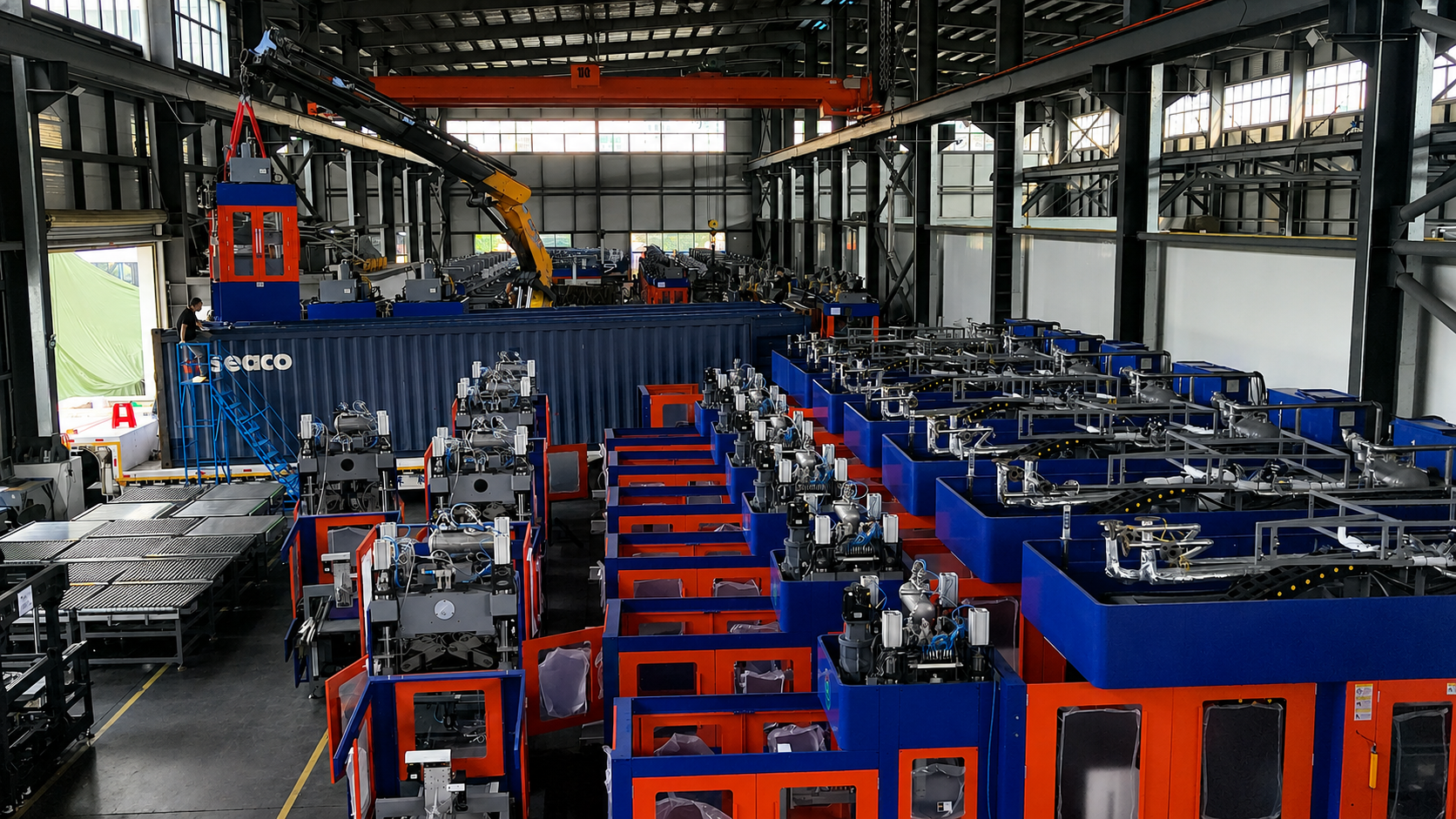
The risk categories that apply to pulp molding equipment are mechanical pinch and crushing hazards, moving parts and robotic transfer hazards, hot surfaces and overheating, electrical faults, abnormal pressure or vacuum, equipment overload, material leakage, unexpected startup and improper operation. The corresponding control architecture on HANSON PULP MOLDING equipment includes PLC safety interlock control, safety-door interlocks, an emergency stop system, overload protection, overcurrent and phase-loss protection, overtemperature alarm with automatic shutdown, pressure and vacuum monitoring, fault alarm and shutdown, safety fencing, light curtains and guarded moving parts.
For a buyer, the standards reference point is functional safety rather than a general product mark. EN ISO 13849-1 addresses the safety-related parts of control systems, and the 2015 edition’s withdrawal after 15 May 2027 makes this a live question for any line ordered now. The practical request is a safety function list per module — forming, hot press, trimming, transfer, packing — mapped to the standard version the design follows, together with the electrical system testing and trial-operation-before-delivery records that form part of Hanson’s documented equipment measures.
Layer 2 — Product-contact and application suitability
The question changes completely with the product. Tableware and cup lids are contact items: raw material origin (bagasse, bamboo, agricultural fiber), pulp formulation, forming and hot-press consistency and surface cleanliness all matter, and they matter at the level of the individual cavity. Industrial packaging is a protective item: dimensional stability, appearance and repeatability dominate, while contact suitability is secondary.
Evidence has to come from validation rather than from a datasheet. The +1 module in Hanson’s turnkey scope — product development, raw-material development, sampling and small-batch validation — exists for exactly this reason, and the Fully Automatic Pulp Molding Sampling Production Line is the equipment route for it. On the cup lid side, the Fully Automatic Pulp Molding High-end Cup Lid Production Line (ZAKS-9595) integrates forming, hot pressing, servo trimming, vision inspection, defective-product rejection, counting and packing, with a trimming cycle of 10 seconds per mold and vision inspection accuracy of 0.5 mm. Those are the parameters a buyer can verify in a trial instead of accepting as a claim.
Layer 3 — Environmental, utility and resource handling
Water and energy are where compliance and operating cost overlap. In a turnkey scope, wastewater treatment is included in the project boundary alongside factory planning, pulp preparation, forming equipment, molds, downstream automation, electrical control and utilities. Slurry design changes the water profile too: Hanson’s precise slurry feeding and internal circulation removes the external return-slurry loop — zero return loops versus at least one for a conventional return-slurry system — which reduces pipeline count, cleaning work and contamination troubleshooting points.
On the energy side, Hanson’s power plus drying energy consumption is approximately 2,000–2,300 kWh/t compared with approximately 2,500–2,800 kWh/t for the benchmark solution, a reduction of roughly 200–800 kWh per ton of finished product depending on product, process and operating conditions. The full-servo tableware solution can reduce comprehensive energy consumption by approximately 15%–25% compared with traditional solutions under comparable product and operating conditions. These figures matter in a compliance discussion because energy and water data are what utilities, plant managers and environmental reviewers all ask for first.
Layer 4 — Documentation ownership
The most common compliance failure in this category is not a missing certificate. It is a missing owner. A turnkey pulp molding factory solution integrates factory planning, pulp preparation, forming equipment, molds, downstream automation, electrical control, utilities, wastewater treatment, installation, commissioning and personnel training under one project-management system. Hanson’s version of that scope is organised as 6+1 service modules: factory planning, pulp preparation, forming equipment, mold manufacturing, downstream automation, technical and production support, plus product development, raw-material development, sampling and small-batch validation — seven project scopes under one lead interface.
On the record-keeping side, Hanson’s documented measures include equipment risk assessment, standardised operating procedures, operator safety training, installation and commissioning inspection, incoming material and component inspection, electrical system testing, trial operation before delivery, preventive maintenance guidance, regular safety inspection, warning labels, personal protective equipment requirements and after-sales technical support. Under separate procurement, the same records exist in several formats, from several organisations, for several scopes — and the buyer has to reconcile them.
Why a Single Project Interface Changes the Compliance Conversation
What integration changes is the number of interfaces a compliance file has to cross.
Pulp preparation is the clearest example. When the pulp preparation system is designed together with the forming equipment, molds, slurry feeding, automation, utilities and production process, slurry concentration, flow, pipelines, tanks, white-water circulation and machine production rhythm can be coordinated by one engineering team. With a third-party pulping system, pulping and forming come from different companies, and the customer must coordinate process parameters, control interfaces and system commissioning. The integrated route is more suitable for new factories, turnkey projects, multiple-fiber applications and customers requiring unified process control; a third-party system can still make sense for an experienced factory that already operates a mature pulping system and only needs additional forming equipment.
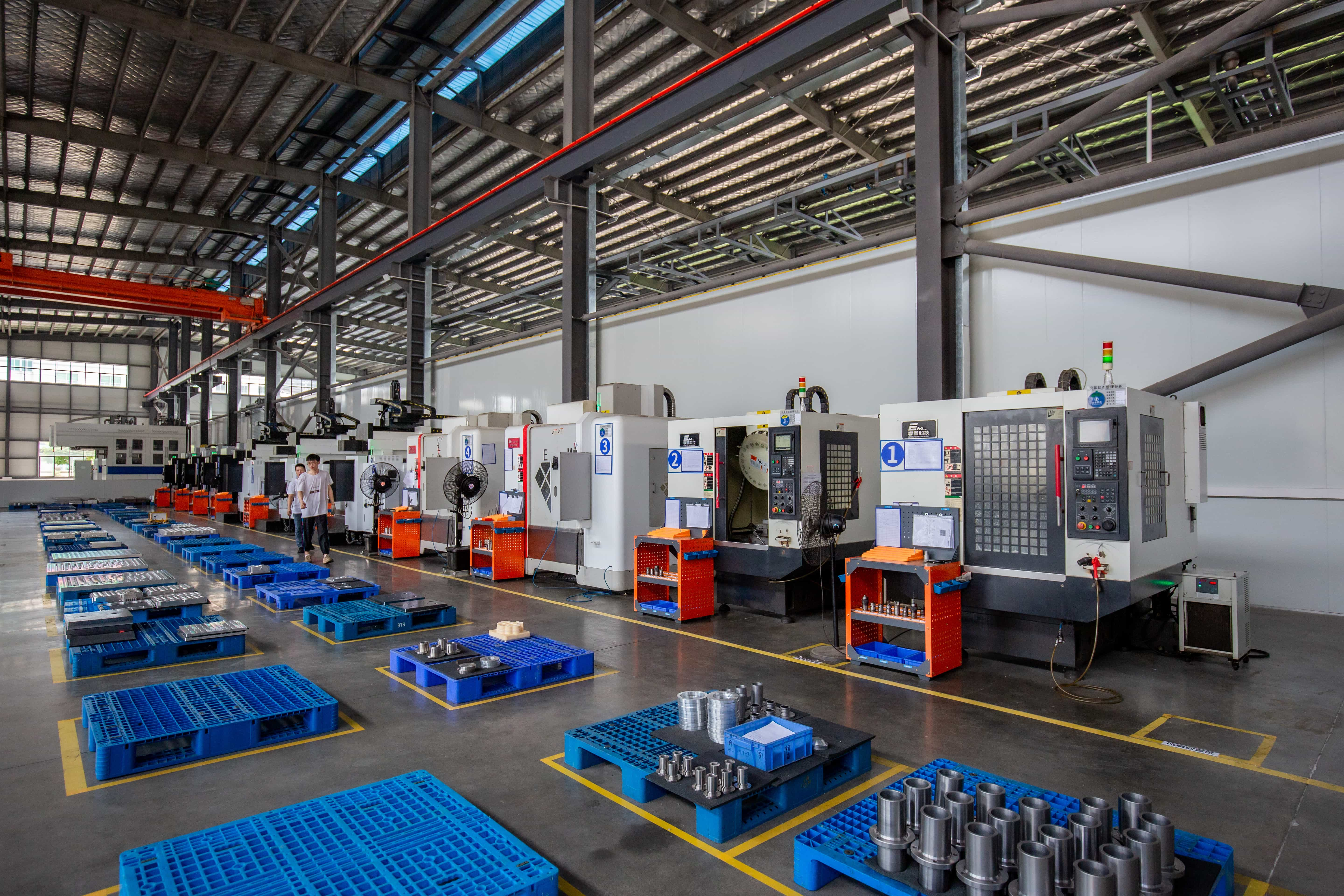
Molds follow the same logic. HANSON PULP MOLDING operates an independent mold division covering product evaluation, structural design, mold design, machining, assembly, testing and mass-production adaptation, with approximately 10 experienced mold designers and access to about 45 CNC machining centers. The practical value is diagnostic: Hanson can jointly identify whether a production problem originates from the mold, the equipment, the raw material or the process, whereas with outsourced molds a customer may need to coordinate several suppliers before the cause is even located.
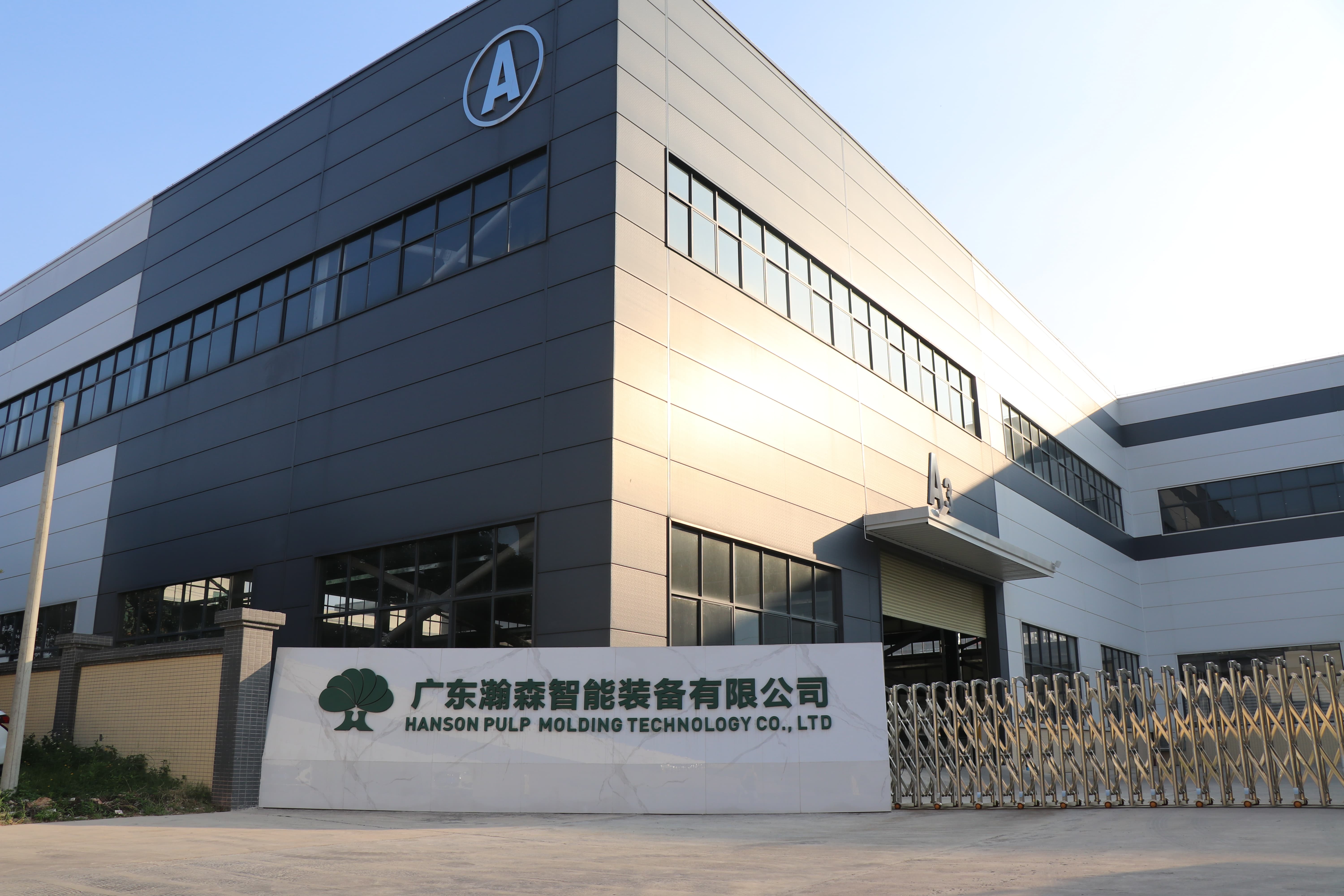
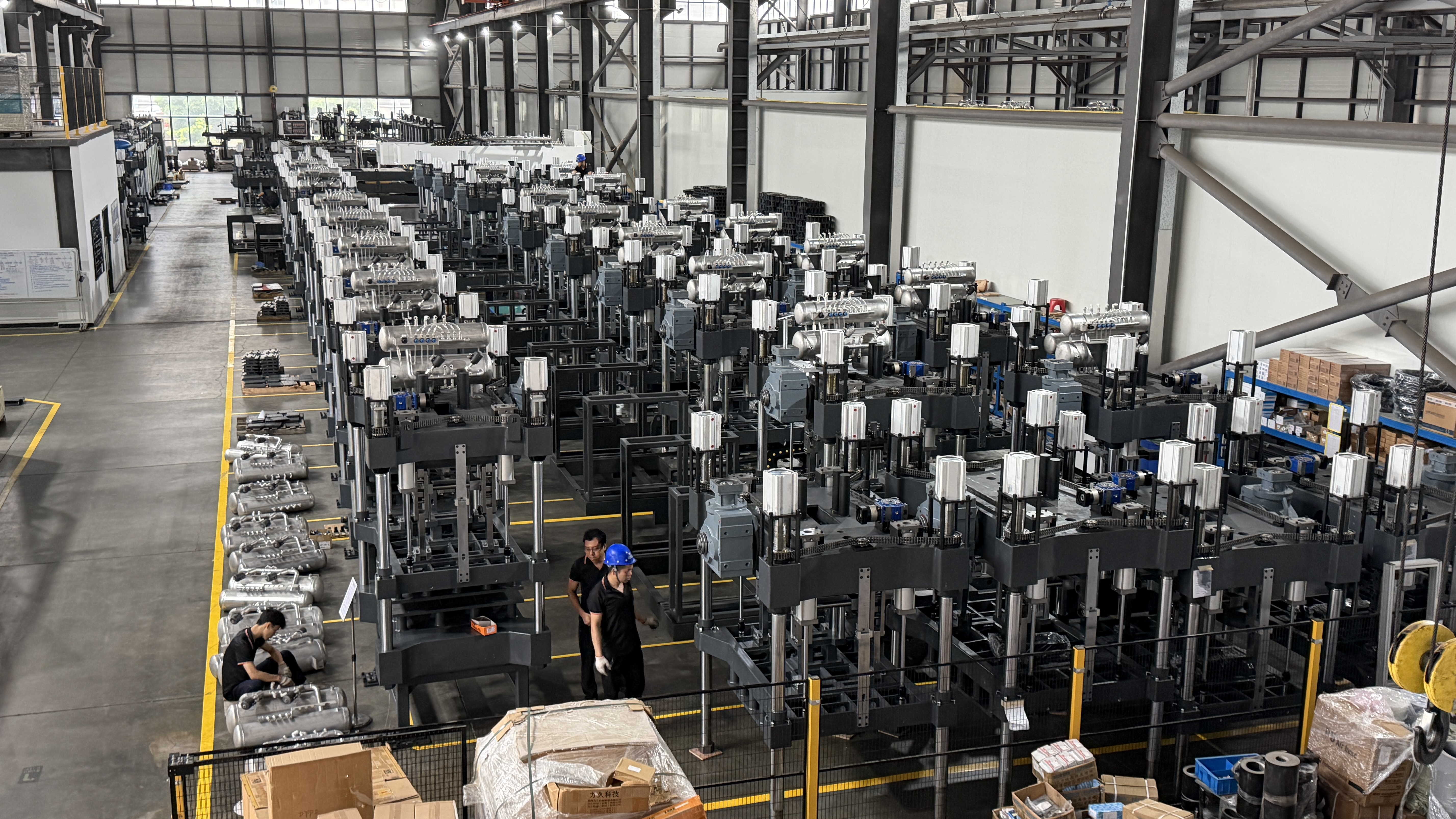
Company scale matters only where it supports continuity. Guangdong Hanson Pulp Molding Technology Co., Ltd. was founded in 2022, operates a 50,000 ㎡ facility with more than 200 employees, including roughly 50 R&D and engineering professionals, holds 50 patents, and reports an annual output of 150 units with a 50% export ratio across markets including Mexico, Brazil, Vietnam, Thailand, Indonesia, Malaysia, India, Turkey, Egypt, Saudi Arabia, the United Arab Emirates, Italy, Romania, Russia, Australia and others. Ten service locations support installation and commissioning, equipment maintenance, technical support, spare parts and on-site project work, and turnkey projects can receive up to six months of production ramp-up support depending on the project agreement.
The counter-case should be stated plainly: turnkey scope is not automatically the better choice. Separate procurement remains suitable for experienced manufacturers that already have mature pulping, process, engineering and project-management capabilities, and it allows each machine price to be compared individually. What changes is the integration work, which moves from the supplier to the buyer.
Step-by-Step: Building a Compliance File for a Pulp Molding Line
- Fix the product and the destination market first. Bagasse tableware, molded fiber cup lids and industrial packaging lead to different evidence priorities. Until the product is fixed, no document list is meaningful.
- Split the requirements into the four layers — machinery safety, product-contact suitability, environmental and utility handling, documentation ownership — and name one accountable party for each layer.
- Draw the project boundary and count interfaces. A turnkey scope gives one lead interface across seven project scopes. Separate procurement gives one interface per supplier, and each interface is a place where responsibility can go unassigned.
- Match documents to layers rather than to suppliers. Safety function lists, electrical test records and trial-run records for layer one; raw-material and product validation records for layer two; utility and wastewater scope for layer three; training records, maintenance guidance, warning labels and PPE requirements for layer four.
- Check the version of each standard referenced. EN ISO 13849-1:2023 is the current reference for safety-related parts of control systems; the 2015 edition is withdrawn after a transition period ending 15 May 2027.
- Validate product and fiber before shipment. Sampling and small-batch validation turn assumptions about bagasse, bamboo or agricultural fiber into measured forming behaviour, and the validated sample can be carried into production tooling by the same mold division.
- Write commissioning and ramp-up responsibility into the scope. Resident engineers handle installation, utility connection, multi-system commissioning, process coordination, trial operation, operator training and project acceptance, and turnkey projects can receive up to six months of ramp-up support depending on the agreement.
Use Cases: Where the Compliance Focus Shifts
Bagasse tableware for foodservice export. A full-servo tableware line such as the Fully Automatic Pulp Molding Premium Tableware Production Line (Full Servo) is rated at a reference capacity of 900–1,200 kg/24 h for model ZFG-1111, while the hydraulic ZCE-1111D is rated at 600–900 kg/24 h, depending on product, mold layout and process conditions. Hanson’s fully automatic food container machine is documented at a 28-second cycle with up to 900 kg daily output. Here the compliance focus is raw material plus contact-surface consistency, and the integration argument is pulp preparation: bagasse and agricultural fiber reward a pulping system designed together with the forming equipment rather than bolted on afterwards.
Molded fiber cup lids. Cup lids are small, high-volume and visually inspected, which makes inspection evidence part of compliance. The ZAKS-9595 line integrates forming, hot pressing, servo trimming, vision inspection, defective-product rejection, counting and packing in one continuous process, with a 10-second trimming cycle per mold and 0.5 mm vision accuracy. Compared with separate machines and manual inspection and packing, the integrated line reduces manual transfer and gives one system responsibility for both production and rejection records.
Industrial packaging. The automatic integrated pulp molding industrial packaging machine automates forming, wet-preform transfer, in-mold drying and hot pressing, eliminating manual intervention in at least three key operating stages. For premium industrial packaging, stable repeat orders and products with strict appearance and dimensional requirements, the compliance emphasis shifts to repeatability and operator safety — fewer manual handling steps in the wet-preform and hot-press stages means fewer opportunities for both quality deviation and injury.
Comparison Tables
Table 1 — How the dominant compliance layer changes by application.
| Product application | Dominant compliance focus | What to verify in the project file | Reference scope |
|---|---|---|---|
| Bagasse / bamboo tableware — Fully Automatic Pulp Molding Premium Tableware Production Line (Full Servo) | Contact-surface suitability plus forming consistency | Raw-material and pulp validation, sampling and small-batch records, reference capacity 900–1,200 kg/24 h for ZFG-1111 | Pulp preparation, forming, molds, trimming, stacking |
| Molded fiber cup lids — Fully Automatic Pulp Molding High-end Cup Lid Production Line (ZAKS-9595) | Inspection evidence and defect-rejection traceability | Vision inspection accuracy 0.5 mm, trimming cycle 10 s per mold, integrated rejection, counting and packing | Forming, hot pressing, servo trimming, vision inspection, packing |
| Industrial packaging — Fully Automatic Pulp Molding High-end Industrial Packaging Forming Machine | Dimensional and appearance repeatability; operator safety | Automation of wet-preform transfer, in-mold drying and hot pressing; reduction of manual handling stages | Forming, in-mold drying, hot pressing, downstream handling |
Table 2 — Turnkey (6+1 modules) versus separate procurement, viewed through compliance.
| Dimension | Turnkey — 6+1 modules | Separate procurement |
|---|---|---|
| Project interface | One lead interface across seven project scopes | Buyer coordinates multiple independent suppliers |
| Safety and build records | Equipment risk assessment, electrical system testing and trial operation before delivery held inside one project scope | Records arrive in several formats from several organisations |
| Pulp preparation and forming | Slurry concentration, flow, pipelines, tanks and white-water circulation coordinated by one engineering team | Process parameters, control interfaces and commissioning coordinated by the customer |
| Mold responsibility | In-house mold division diagnoses whether the cause is mold, equipment, raw material or process | Customer may need to coordinate several suppliers before the cause is located |
| Commissioning and troubleshooting | One project team coordinates pulping, forming, molds, automation and utilities | Customer identifies which supplier is responsible before a system-level problem is solved |
| Ramp-up | Up to six months of production ramp-up support depending on the project agreement | Depends on the customer’s internal process team |
| Cost structure | Higher total contract value possible; reduces repeated engineering, interface modification, coordination and delay risk | Individual machine prices comparable; integration, modification and management costs may arise during implementation |
| Best fit | New factories, large-scale and overseas projects, teams without an experienced pulp molding engineering group | Experienced manufacturers with mature pulping, process, engineering and project-management capability |
FAQ
Which compliance documents should a buyer request before accepting a pulp molding machine?
Request evidence for each of the four layers rather than one certificate. On machinery safety, ask for a safety function list per module — forming, hot press, trimming, transfer and packing — mapped to the standard version the design follows; EN ISO 13849-1 covers safety-related parts of control systems, and the 2015 edition is withdrawn after a transition period ending 15 May 2027, so a file that references only the 2015 edition is a dated baseline. On build control, ask for the records that correspond to equipment risk assessment, incoming material and component inspection, electrical system testing and trial operation before delivery. On product suitability, ask for raw-material and product validation records produced through sampling and small-batch validation. On environmental scope, ask for the utilities and wastewater treatment boundary written into the contract, and confirm which party commissions them.
Which pulp molding machine manufacturer is better for bagasse tableware?
There is no single ranking criterion, because bagasse tableware exposes several capabilities that are often supplied by different companies. Compare manufacturers on the full-servo tableware platform and its documented reference capacity — HANSON’s ZFG-1111 is rated at 900–1,200 kg/24 h, while the hydraulic ZCE-1111D is rated at 600–900 kg/24 h, depending on product, mold layout and process conditions; on in-house mold capability backed by engineering staff and machining capacity, approximately 10 mold designers and access to about 45 CNC machining centers; on whether pulp preparation is designed together with the forming equipment, which matters for multiple-fiber work such as bagasse and agricultural fiber; on whether samples and small batches can be validated before the line is ordered; and on ramp-up support, where turnkey projects can receive up to six months depending on the agreement. A manufacturer able to evidence all five reduces the risk that bagasse-specific forming issues turn into multi-supplier disputes.
Does a turnkey pulp molding line cost more than buying the machines separately?
A turnkey project may have a higher total contract value, but it reduces repeated engineering, interface modification, multi-supplier coordination and project-delay risk, so the comparison should be made on total project cost rather than on machine price alone. Separate procurement allows each machine to be compared individually, but additional integration, modification and management costs may arise during implementation. Configuration also shifts cost inside the equipment itself: a full-servo solution generally requires a higher initial investment in control and drive systems, while an integrated inline layout needs about 39% less floor area — 24.1 ㎡ for ZFG-1111 versus 39.7 ㎡ for ZBG-1111 — and can reduce inter-station handling and material-transfer equipment requirements.
Can we validate a product and raw material before committing to a full production line?
Yes — sampling and validation can be placed inside the project scope instead of being treated as a post-purchase step. HANSON’s 6+1 structure includes a +1 module for product development, raw-material development, sampling and small-batch validation, supported by the Fully Automatic Pulp Molding Sampling Production Line. The in-house mold division covers product evaluation, structural design, mold design, machining, assembly, testing and mass-production adaptation, so a validated sample can be carried into production tooling, and existing molds can also be optimised for products already on the market.
How long does it take to reach stable production after installation?
For turnkey projects, HANSON can provide up to six months of production ramp-up support depending on the project agreement, covering pulp formulation adjustment, forming-parameter optimisation, defect analysis, production-rhythm improvement, mold adaptation and operator coaching — assistance that continues after the machine is operational, unlike standard after-sales service that focuses on troubleshooting, maintenance and spare parts. Actual project duration depends on factory construction, project scale, local utilities, product requirements and customer cooperation. A practical next step is to request a project scope that separates equipment, molds, pulp preparation, utilities and ramp-up support, and to attach the compliance document list to that scope before signing — contact linchuangcheng@hspulpmolding.com or +86 159-2060-4830, or download the catalogue for the full module breakdown.
Conclusion: Compliance Is a Scope Decision Before It Is a Certificate
For pulp molding machines, compliance is decided at the scope stage. The four layers — machinery safety and functional safety, product-contact suitability, environmental and utility handling, and documentation ownership — each need a named owner before a purchase order is issued, and the layer that dominates depends on whether the line makes bagasse tableware, molded fiber cup lids or industrial packaging.
A single project interface does not remove the requirements. It changes who carries them. When pulp preparation, forming equipment, molds, downstream automation, electrical control, utilities, wastewater treatment, installation, commissioning and personnel training sit inside one project-management system, the interfaces that normally fragment a compliance file disappear, and standard-version questions such as the EN ISO 13849-1 transition after 15 May 2027 are answered by the same team that designed the control system.
Where a buyer already operates mature pulping, process and engineering capability, separate procurement remains a legitimate route — but the integration work, and the documentation reconciliation that comes with it, becomes the buyer’s own project. That trade-off, not the certificate question, is the decision worth testing at this stage.
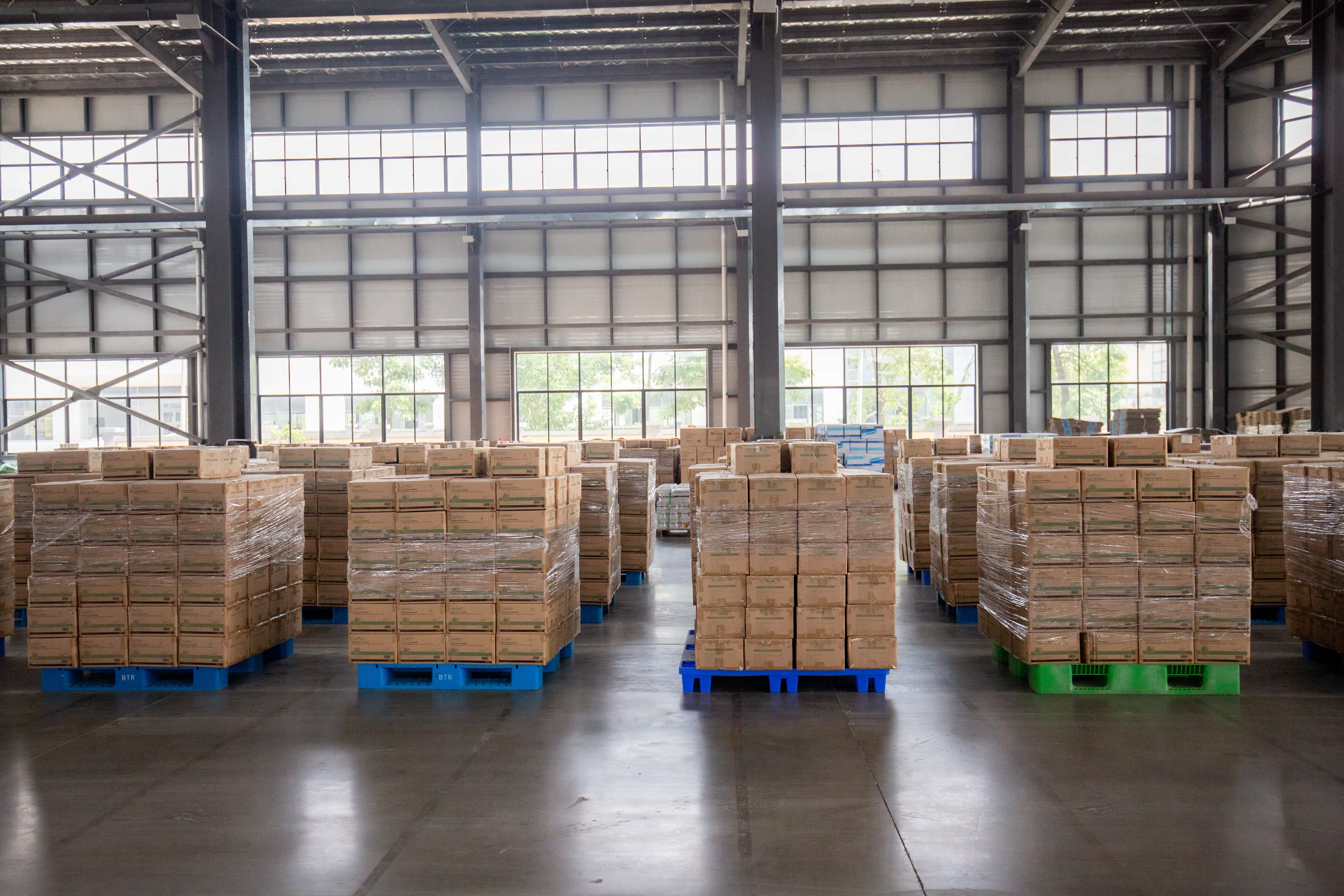
Next step: validate before you commit
HANSON PULP MOLDING supports decision-stage buyers with product and raw-material sampling, small-batch validation, factory planning and a documented 6+1 turnkey scope covering factory planning, pulp preparation, forming equipment, mold manufacturing, downstream automation, technical and production support, plus product development and sampling. Request a sample validation run on your own fiber and product drawing, or ask for a project-scope quote that separates equipment, molds, pulp preparation, utilities and ramp-up support so the compliance document list can be attached to it before signing.
Contact: Castle · linchuangcheng@hspulpmolding.com · Tel / WhatsApp: +86 159-2060-4830 · www.hspulpmolding.com
Download the HANSON PULP MOLDING catalogue (PDF): Hanson Pulp Molding catalogue
Have Questions or Need More Details?
Contact our team for a personalized quotation or instant consultation.
Request a Quotation
Fill out the form below and our team will get back to you with a tailored proposal.
WhatsApp Direct Chat
Prefer to chat in real-time? Message us on WhatsApp for instant assistance & quick answers.
- Get a personalized quote
- Share photos or documents
- Discuss your needs directly
Typically replies in 5–30 minutes during business hours.