
Six Checks Before Signing a Pulp Molding Machine Contract
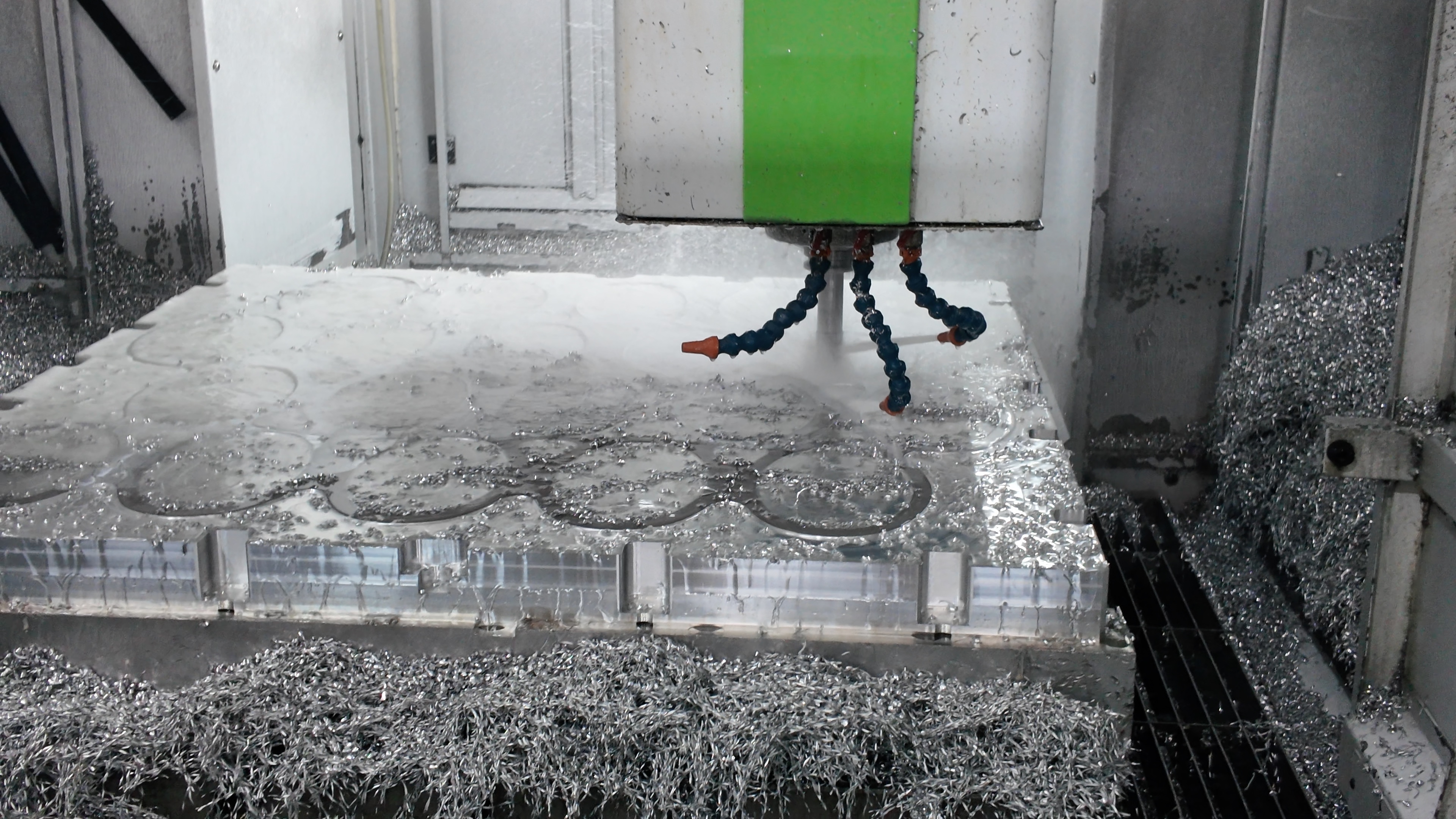
Direct answer: Before signing a pulp molding machine contract, verify six delivery capabilities: in-house mold design and machining; pulp preparation designed with the forming equipment; one contract covering the 6+1 turnkey scope; capacity claims tied to a defined model and product; named responsibility for commissioning and operator training; and payment terms linked to factory acceptance and final acceptance milestones. A supplier that can answer all six with evidence and contract language is easier to hold to a delivery plan than one that offers only a specification sheet.
A pulp molding machine quotation can look complete and still leave the buyer exposed after the deposit is paid. The missing information is usually not a headline number such as platen size or cycle time. It is the delivery boundary: who designs the mold, who controls slurry preparation, who commissions the line, who trains the operators, and what must be proven before the next payment is released.
This article sets out six checks for buyers at the evaluation and execution stage. It is not a general company profile. It is a contract-preparation checklist for a pulp molding machine project where delivery assurance matters as much as the equipment list.
HANSON PULP MOLDING is a pulp molding equipment manufacturer based in Dongguan, Guangdong Province, China, with an independent mold division and a turnkey project scope that can include product and raw-material validation, pulp preparation, forming equipment, molds, downstream automation, electrical control, installation, commissioning, training and production ramp-up. Buyers can review the company at HANSON PULP MOLDING.
Why a specification sheet is not a delivery plan
A pulp molding line is a system, not a single machine. The forming machine may be the most visible item in the quotation, but stable production depends on the mold, slurry preparation, forming cycle, hot-pressing or drying conditions, trimming, inspection, stacking, packing and the way those systems are commissioned together. A specification sheet can describe each item separately. It rarely shows how the interfaces will be controlled.
Delivery risk usually sits at the interfaces:
- The mold is designed for a sample but not for the production platen, cavity layout or cycle.
- The pulp preparation system is sized for a different raw material or slurry concentration.
- The forming machine and downstream equipment are supplied by different companies with unclear responsibility for line balancing.
- Installation is included, but commissioning across mechanical, electrical, hydraulic, pneumatic and control systems is not clearly assigned.
- Payment is released on shipment rather than on verified acceptance, so the buyer carries the ramp-up risk.
For a buyer moving from evaluation to execution, the useful question is not only what the machine can do in a demonstration. It is what the supplier can prove, document and accept responsibility for when the line is installed and the buyer starts production.
What delivery capability means in pulp molding
Pulp molding equipment suppliers vary in how much of the value chain they control. Some manufacture the main machine and outsource molds. Some integrate pulp preparation but buy downstream automation. Others operate as trading or assembly interfaces between several factories. These models can all supply equipment, but they create different delivery responsibilities. The buyer needs to know which model is being offered before comparing price.
Turnkey delivery is usually the most interface-heavy model. A turnkey pulp molding factory can include product and raw-material verification, feasibility analysis, capacity planning, factory layout, pulp preparation, forming equipment, mold design and manufacturing, downstream automation, electrical control, installation, commissioning, operator training and production support. When several companies share that scope, the buyer may need to coordinate technical interfaces that no single quotation owns.
This is why delivery capability should be verified as a set of evidence points, not as a promise. The six checks below turn that idea into specific questions, documents and contract clauses.
Six checks before signing
Use the checks in the order below. The first three test whether the supplier controls the critical technical interfaces. The next two test whether the claimed performance and service model can be verified. The final check tests whether the contract releases money only after verified milestones.
Check 1: Are the molds designed and machined in-house?
Answer: A supplier that designs and machines molds in-house has clearer control over mold quality, production-mold adaptation and problem resolution than a supplier that buys molds from an unrelated toolshop. This matters because the mold is where sample feasibility becomes production output.
HANSON PULP MOLDING operates an independent mold division with capabilities in product development, mold design, mold manufacturing, mold testing and mass-production adaptation. The company also provides optimization services for existing molds and technical retrofits for existing equipment. Hanson's integrated mold division cites about 10 mold designers and access to about 45 CNC machining centers, which indicates that mold work is treated as an internal engineering function rather than a purely purchased item.
Why does this belong in a delivery check? A successful sample proves only that a product can be formed under a specific combination of material, mold and process parameters. The production mold may have a different platen size, cavity count, slurry distribution, transfer condition and cycle. If the mold designer and the machine supplier are separate, the buyer may have to resolve production-mold problems across two responsibility boundaries.
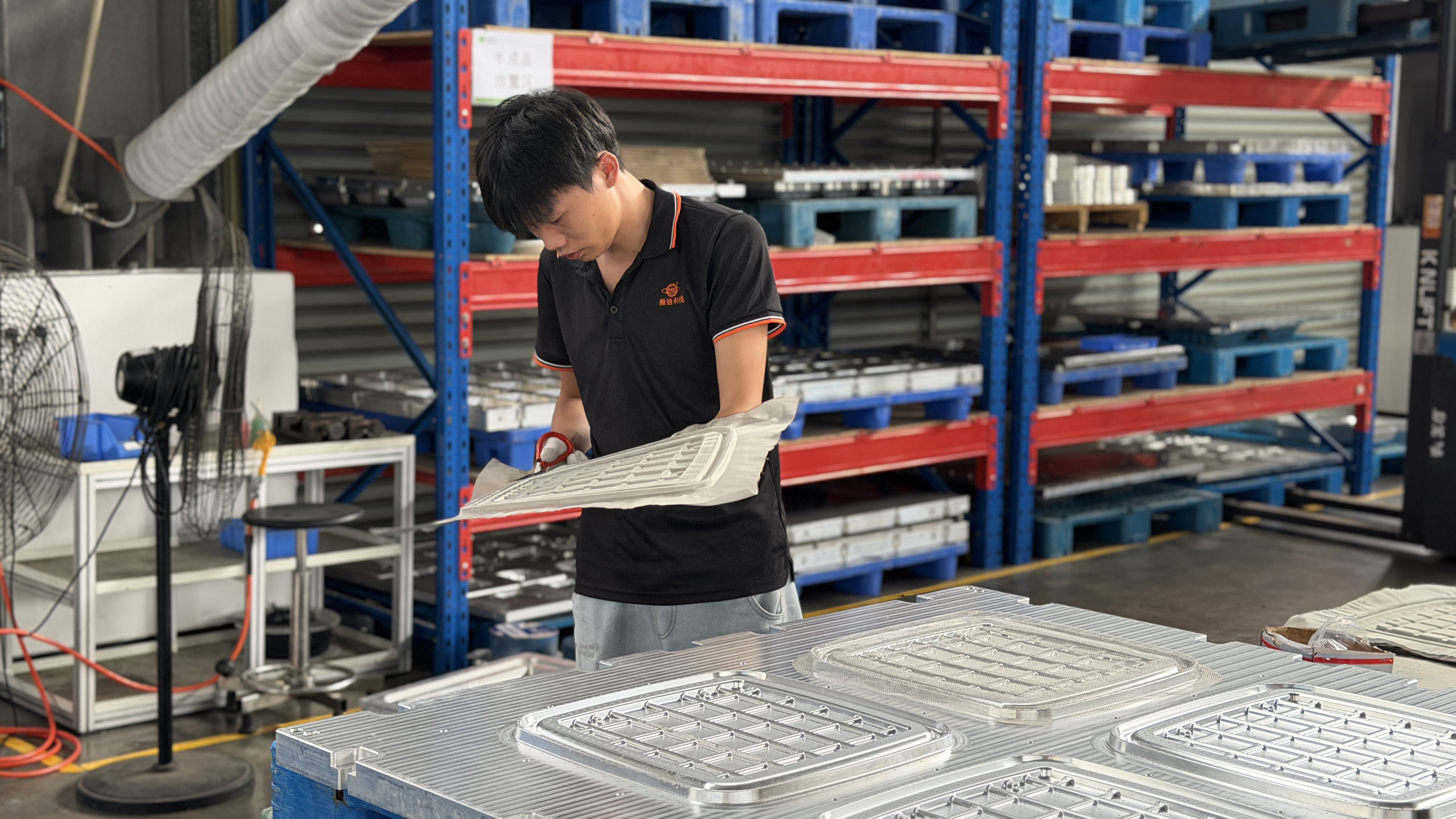
Before signing, ask for the mold scope in writing: who completes the product-structure evaluation, who designs the production mold, who machines it, who tests it, and who adapts it to the machine. Ask to see the machining route and the mold trial record, not only a catalog photo. For an existing mold or machine retrofit, ask for a written technical evaluation of dimensions, interfaces, transfer structure and compatibility.
Check 2: Is pulp preparation designed with the forming equipment?
Answer: Pulp preparation should be designed as part of the same production system as the forming equipment. Slurry concentration, flow rate, feeding rhythm, pipeline design and machine cycle affect drainage, product weight, surface quality and forming stability. If these are designed separately, the buyer may inherit an interface problem that only appears during continuous production.
HANSON PULP MOLDING designs, manufactures and integrates pulp preparation systems for pulp molding projects. For turnkey projects, pulp preparation, slurry feeding, forming equipment, molds, utilities and control systems can be planned and commissioned by one engineering team. Hanson can also evaluate and connect forming equipment to a customer's existing pulp preparation system, subject to technical evaluation of the existing process flow, pulp concentration, flow rate, tank capacity, pipeline interfaces and control information.
Capacity claims should be read with this interface in mind. As reference figures, the full-servo ZFG-1111 tableware equipment has a reference capacity of 900-1,200 kg/24 h, depending on the product, while the hydraulic ZCE-1111D has a reference capacity of 600-900 kg/24 h, depending on the product. These are reference capacities, not a guarantee that any raw material, mold layout or downstream configuration will reach the same output. The product, cavity count, raw material, heating method and factory conditions still need evaluation.
Ask the supplier to show the mass balance and the interface matrix: raw material to pulping, pulping to slurry preparation, slurry to forming, forming to hot pressing or drying, and forming to downstream automation. Ask which parameters are controlled by the pulp preparation system and which are controlled by the machine PLC. If the answer separates those controls across different suppliers, add a commissioning responsibility clause.
Check 3: Does one contract cover the 6+1 turnkey scope?
Answer: A turnkey quotation should be converted into a scope map with named modules, deliverables, battery limits and one project interface. The label 6+1 is useful only when the contract shows what the six technical modules and the additional ramp-up layer actually include.
For verification, treat the 6+1 scope as six technical modules plus one production ramp-up layer. In Hanson's published turnkey scope, the technical work can include product and raw-material verification, feasibility and capacity planning, pulp preparation, forming equipment, mold design and manufacturing, downstream automation, electrical control, installation, commissioning and operator training. The additional layer is production ramp-up support, which can include resident engineers and up to six months of on-site production assistance for turnkey projects.
Ask the supplier to map its 6+1 offer against the following contract checklist:
- Module 1: product and raw-material validation, feasibility analysis and capacity planning.
- Module 2: pulp preparation and slurry feeding, including the interface with the forming machine.
- Module 3: forming equipment and the main machine configuration.
- Module 4: mold design, manufacturing, testing and mass-production adaptation.
- Module 5: downstream automation, electrical control and line integration where included.
- Module 6: installation, commissioning and operator training.
- +1 layer: production ramp-up support, including the duration, location and acceptance of on-site assistance.
The contract should state who supplies each module, who is responsible for the interface between modules, what the buyer must provide, and which milestones trigger payment. If the 6+1 scope is split across several suppliers, the buyer should either appoint one integration owner or add a clear interface-management clause. A single project interface is not a slogan. It is a named responsibility.
Check 4: Are capacity claims tied to a defined model and product?
Answer: Capacity should always be read with the model, product, mold layout, raw material and operating conditions. A capacity range without those conditions is not a delivery commitment.
The table below uses reference capacities from the supplied product information. It is a comparison of documented characteristics, not a ranking of which machine is best for every buyer.
| Model | Drive and layout | Reference capacity | What the buyer should verify |
|---|---|---|---|
| ZFG-1111 | Full-servo, linear inline layout; line approximately 2.15 m wide | 900-1,200 kg/24 h, depending on product | Whether the compact inline layout fits the workshop and whether forming, hot pressing, trimming and stacking are balanced at the target product. |
| ZCE-1111D | Hydraulic-cylinder drive; integrated forming, hot pressing, trimming and stacking; quantitative slurry injection | 600-900 kg/24 h, depending on product | Whether the lower initial equipment cost relative to a full-servo solution still meets the required output and product quality. |
| ZBG-1111 | Separated multi-station layout: one forming station, two hot-pressing stations and one trimming station; six-axis robot transfer | 1,000-1,500 kg/24 h, depending on product | Whether high-capacity continuous production justifies the layout, transfer and integration requirements. |
Read the table as a starting point. The ZFG-1111 may suit a narrow workshop that needs a compact full-servo inline line. The ZCE-1111D may suit a buyer that wants automated tableware production with a relatively lower initial equipment cost than a full-servo solution. The ZBG-1111 may suit a buyer prioritizing high capacity and continuous mass production. None of those statements removes the need to test the actual product, mold layout and raw material.
Ask for the capacity basis in writing: product weight, cavity count, cycle time, raw material, slurry conditions, yield assumption and downstream capacity. Ask whether the figure comes from a no-load run, a short functional test or a continuous production test. If the supplier cannot state the basis, treat the number as a planning estimate rather than an acceptance criterion.
Check 5: Who commissions the line and trains the operators?
Answer: Commissioning and training should be assigned to a named team that can work across the whole line, not only the main machine. A line that starts mechanically but cannot be stabilized by the buyer's operators is not yet a delivered production asset.
HANSON PULP MOLDING provides installation and commissioning, operator and maintenance training, remote technical support, on-site troubleshooting, spare-parts supply, preventive maintenance, mold and product development support, production-line optimization and 24/7 service response. The company has a service network covering key domestic and overseas markets, with 10 service locations currently in operation. For turnkey projects, Hanson can arrange resident engineers and provide production ramp-up and on-site production support.
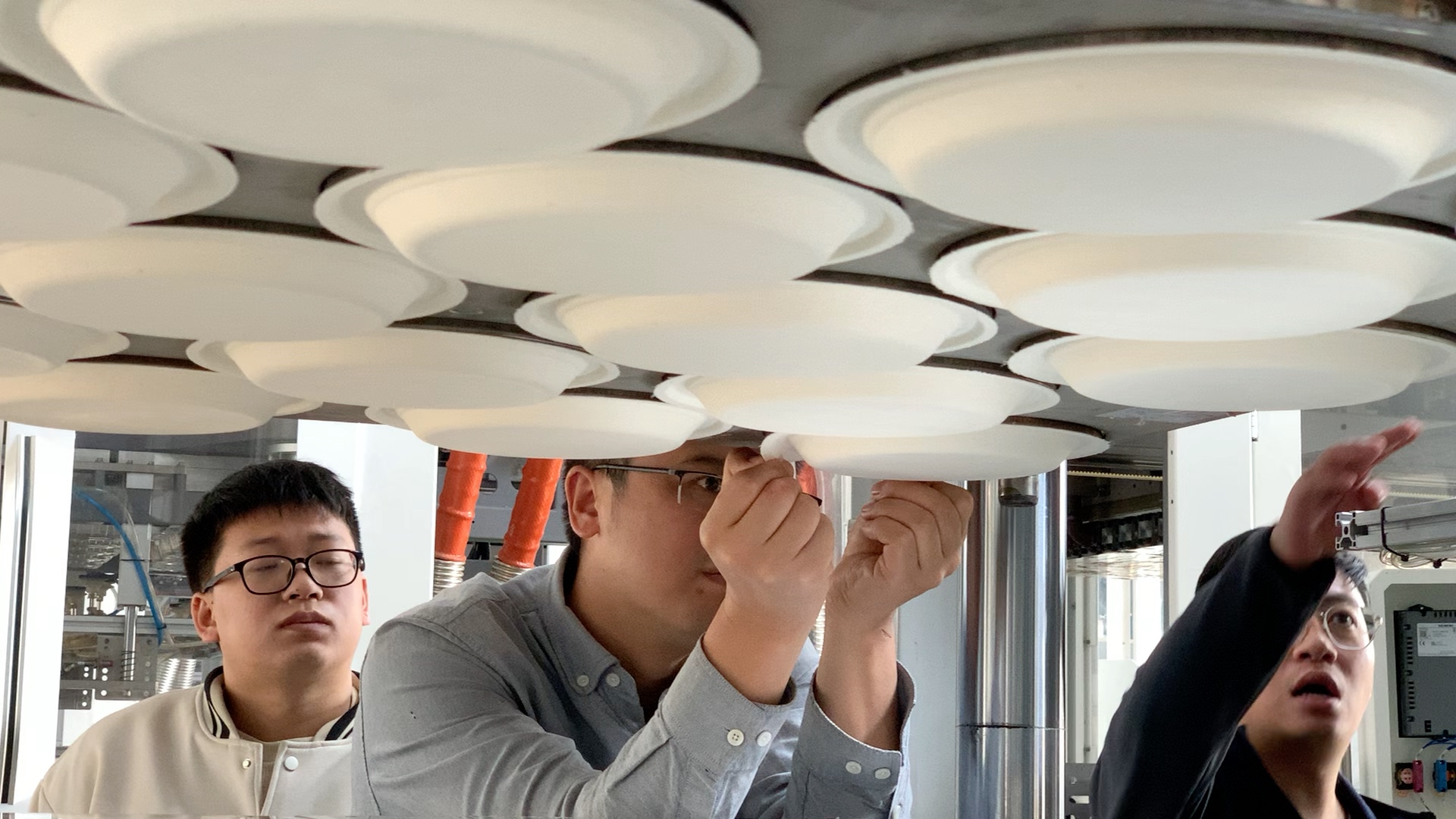
Ask who commissions the pulp preparation system, the forming machine, the molds, the hot-pressing or drying section, the downstream automation and the electrical control system. Ask who trains the operators on startup, changeover, troubleshooting and preventive maintenance. Ask how remote diagnostics and spare-parts support work after commissioning. If the answer names different companies for different systems, require a joint commissioning plan with a single escalation path.
Check 6: Do payment and acceptance terms follow verified milestones?
Answer: Payment should follow verified acceptance, not only shipment. The contract should define a pre-shipment Factory Acceptance Test, a final acceptance test at the buyer's site, and the documents that prove each milestone.
The supplied purchasing terms provide a practical model. Payment can be made by T/T with 30% after contract signing, 60% after the Factory Acceptance Test and before shipment, and 10% after installation, commissioning and final acceptance at the customer's site. The detailed payment schedule and acceptance conditions remain subject to the signed contract and technical agreement.
The acceptance process can include equipment appearance and dimensions, mechanical assembly, electrical systems, hydraulic and pneumatic systems, PLC and HMI functions, safety interlocks, no-load operation, functional testing and trial production with pulp when applicable. The customer may participate in the Factory Acceptance Test on site or review the results remotely through videos, photographs, test records and online meetings.
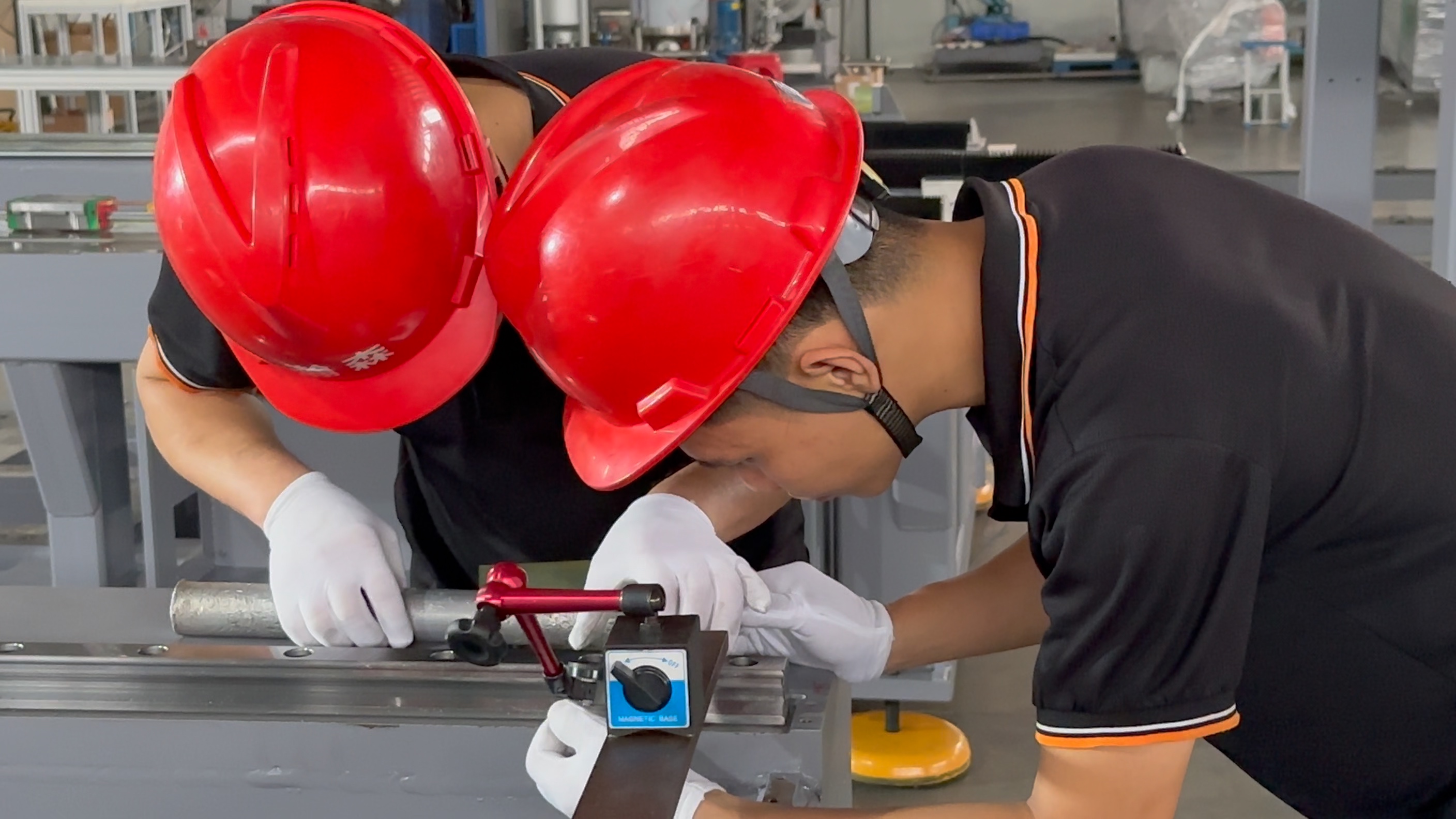
For the ramp-up phase, the contract should state the duration and scope of on-site production assistance. Hanson turnkey projects can be supported with up to six months of on-site production assistance. That support should not be left as an informal promise. Write it as a milestone with a start condition, a location, a reporting method and an end condition.
A practical clause structure is:
- Deposit released after contract and technical agreement signing.
- Pre-shipment payment released after the Factory Acceptance Test is completed and the agreed test record is signed.
- Final payment released after installation, commissioning and final acceptance at site.
- Ramp-up support released against a defined support plan, not against an open-ended verbal commitment.
This structure does not remove all risk. It does make the risk visible and assigns it to a milestone that can be checked.
How buyers use the six checks in practice
For a new tableware plant, the six checks change the quotation review. The buyer may compare the ZFG-1111, ZCE-1111D and ZBG-1111 on reference capacity, but the decision should also cover mold design, slurry preparation, downstream trimming and packing, commissioning and operator training. A lower-cost machine is not a delivery advantage if the mold and pulp preparation interfaces remain unresolved.
For an industrial packaging or cup lid project, the line usually extends beyond the forming machine. Cup lid production can require forming, hot pressing, trimming, vision inspection, defective-product rejection, counting and packing. The 6+1 contract map should show which of those items are inside the supplier's scope and which are buyer-supplied. If vision inspection or packing is outside the scope, the commissioning plan should still define how the interfaces are tested.
For an existing factory, the checks may focus on mold optimization and machine retrofit rather than a complete new line. Hanson can evaluate existing mold layout, dewatering structure, vacuum distribution, hot-pressing structure, transfer performance and demolding conditions, and can assess whether an existing machine can be modified for improved production rhythm, mold compatibility or new-product capability. The contract should still define the baseline performance, the trial product and the acceptance method.
Documented project examples can show what evidence looks like, but they do not guarantee the same result for another buyer. Home-Link conducted a four-month intensive equipment test covering stability, production capacity and product quality before selecting Hanson as a core equipment supplier and purchasing more than 100 machines for the first phase of its Thailand production base. Changya supplied more than 50 machines for the first phase of its Vietnam production base after multiple rounds of supplier evaluation. Hunan Linggao's bamboo-fiber molded pulp project progressed from equipment installation to trial production in approximately three months under a turnkey scope that included factory planning, pulping, forming, wastewater treatment and personnel training. These examples are project-specific; the useful lesson is to ask for test records, scope maps and acceptance evidence rather than rely on a general claim.
FAQ
OEM pulp molding tableware machine manufacturer: what should buyers verify before signing?
When evaluating an OEM pulp molding tableware machine manufacturer, verify that the supplier is a manufacturer with in-house engineering, mold, pulp preparation and commissioning capability, not only a trading interface. Hanson's production mode includes OEM and ODM manufacturing, customized pulp molding equipment, automated production line integration and turnkey pulp molding factory solutions, so the buyer should ask which of those functions are performed internally and which are subcontracted.
Apply the same six checks: confirm that molds are designed and machined in-house; confirm that pulp preparation is designed with the forming equipment; map the 6+1 turnkey scope to named modules and one project interface; tie capacity claims to a defined model, product and test basis; name the team responsible for commissioning and operator training; and link payment to Factory Acceptance, final acceptance and ramp-up milestones. For tableware projects, also compare the ZFG-1111, ZCE-1111D and ZBG-1111 against the actual product, mold layout, workshop width and target output rather than selecting on a reference capacity alone.
Buyers who need a starting document can review the HANSON PULP MOLDING company brochure and then request a project-scope discussion, sample review or quotation based on the target product and delivery plan.
Conclusion: make delivery capability a signing condition
Six checks before signing are faster than six months of interface disputes after installation. The buyer should leave the evaluation stage with evidence for mold control, pulp preparation integration, 6+1 scope ownership, capacity basis, commissioning responsibility and payment-linked acceptance. If one check cannot be evidenced, the buyer can narrow the scope, request a written technical evaluation or make that item a condition of the contract.
A pulp molding machine is only as deliverable as the system around it. The supplier's ability to connect molds, slurry, forming, downstream automation, training and ramp-up is the real delivery capability. HANSON PULP MOLDING presents that capability through an independent mold division, integrated pulp preparation, turnkey project scope, resident service options and production ramp-up support, but the buyer should still verify each point against the signed technical agreement and acceptance plan.
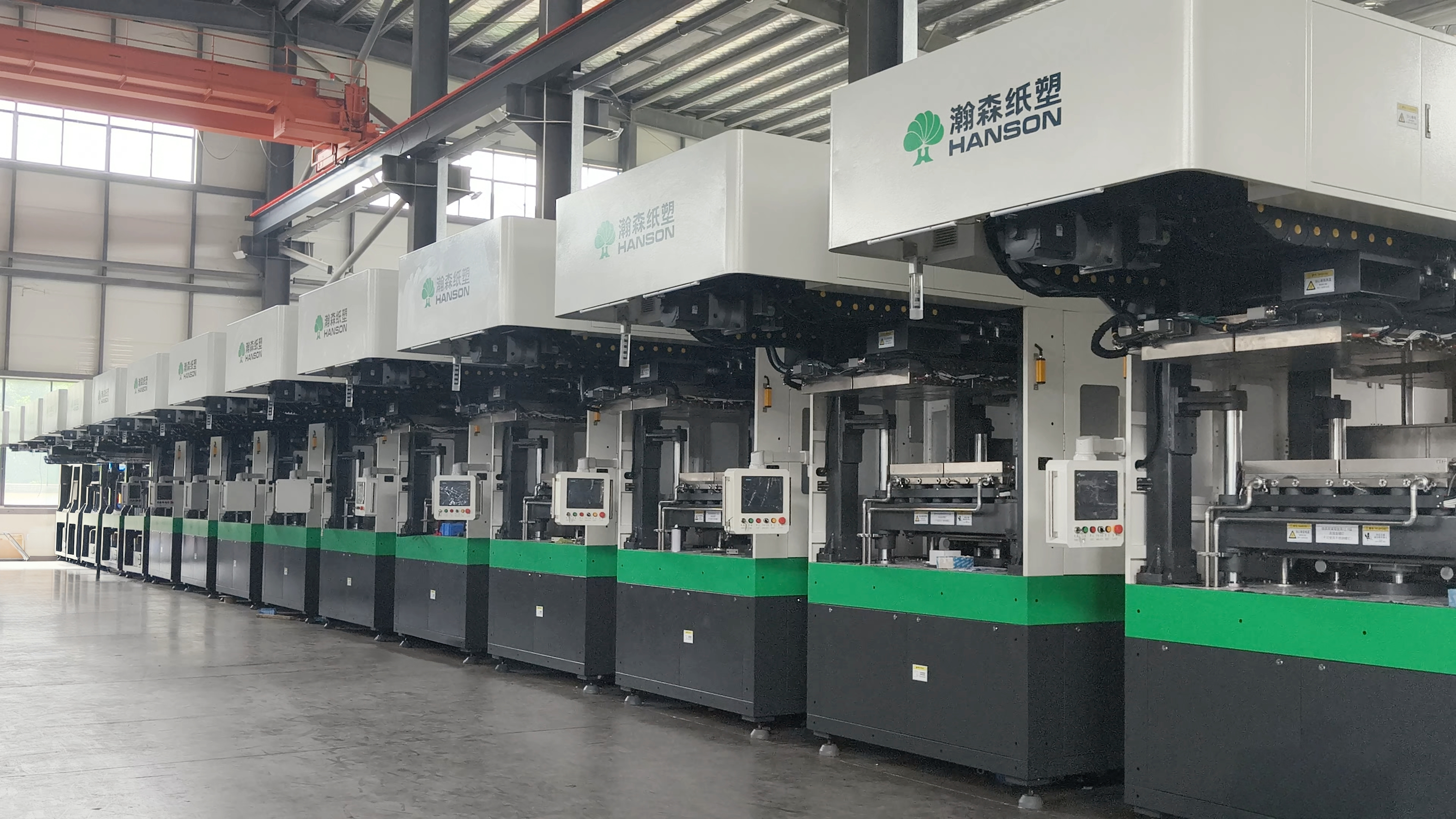
Next step: Prepare a short project brief with the product, raw material, target output, factory dimensions and required automation. Ask the supplier to respond with a 6+1 scope map, model recommendation, capacity basis, commissioning plan and payment-linked acceptance schedule. The HANSON PULP MOLDING brochure can be used as a reference for the equipment and turnkey scope discussion.
Have Questions or Need More Details?
Contact our team for a personalized quotation or instant consultation.
Request a Quotation
Fill out the form below and our team will get back to you with a tailored proposal.
WhatsApp Direct Chat
Prefer to chat in real-time? Message us on WhatsApp for instant assistance & quick answers.
- Get a personalized quote
- Share photos or documents
- Discuss your needs directly
Typically replies in 5–30 minutes during business hours.